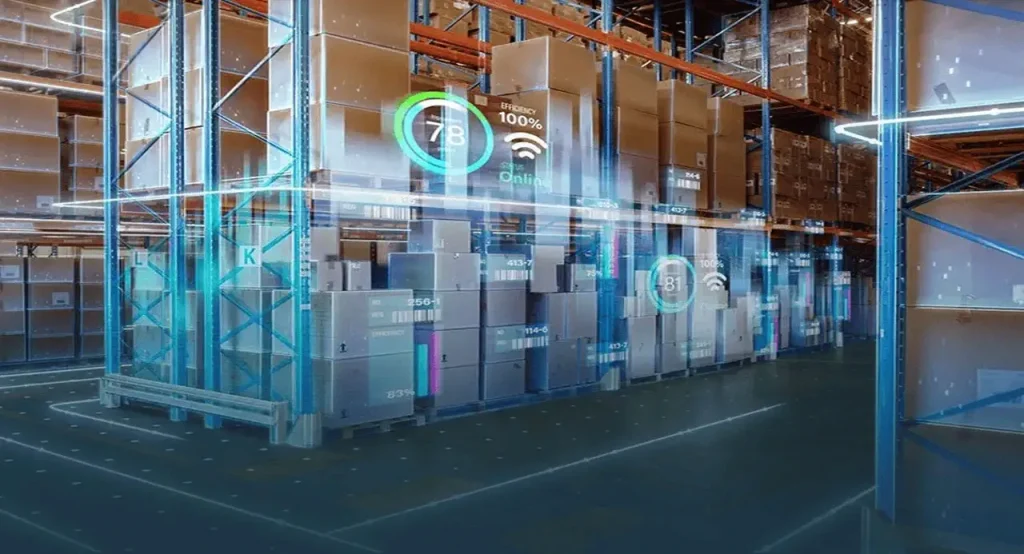
Ecommerce brands are drowning in operational complexity — and most can’t afford a full in-house AI team to fix it. That gap is exactly where freelancers win in 2026. According to Statista’s global ecommerce outlook, online retail revenue is projected to surpass $4.3 trillion worldwide, yet the majority of small and mid-sized stores still run their logistics, inventory, and customer support on disconnected manual processes. A freelancer who can plug AI into those workflows is no longer a “nice to have” — they’re a profit lever the business can measure directly.
This guide is the complete 2026 playbook for building an AI-powered ecommerce freelance practice. You’ll learn the six highest-demand service areas, how to package and price them, the exact tool stack to deliver results, and how to find clients who pay premium rates. Whether you’re a generalist freelancer looking to specialize or already serving ecommerce clients and want to add AI services, this is your roadmap from one-off gigs to a repeatable, high-margin business.
An ecommerce AI freelancer is an independent specialist who helps online stores implement artificial intelligence across operations: demand forecasting, inventory automation, product content generation, customer service chatbots, retention campaigns and logistics optimisation. In 2026, this is one of the highest-value freelance niches because ecommerce operators feel AI pressure directly in their margins and lack in-house expertise. Typical services range from one-off audits at 500 to 1,500 dollars, to implementation projects at 2,000 to 10,000 dollars, to monthly optimisation retainers at 1,000 to 3,000 dollars. The six strongest service areas are demand forecasting, warehouse and fulfilment automation, AI customer service, product content at scale, retention and win-back automation, and returns reduction. Freelancers entering the niche usually succeed by picking one service area and one platform (Shopify being the largest) before expanding.
Why Ecommerce Is the Best Niche for AI-Savvy Freelancers in 2026
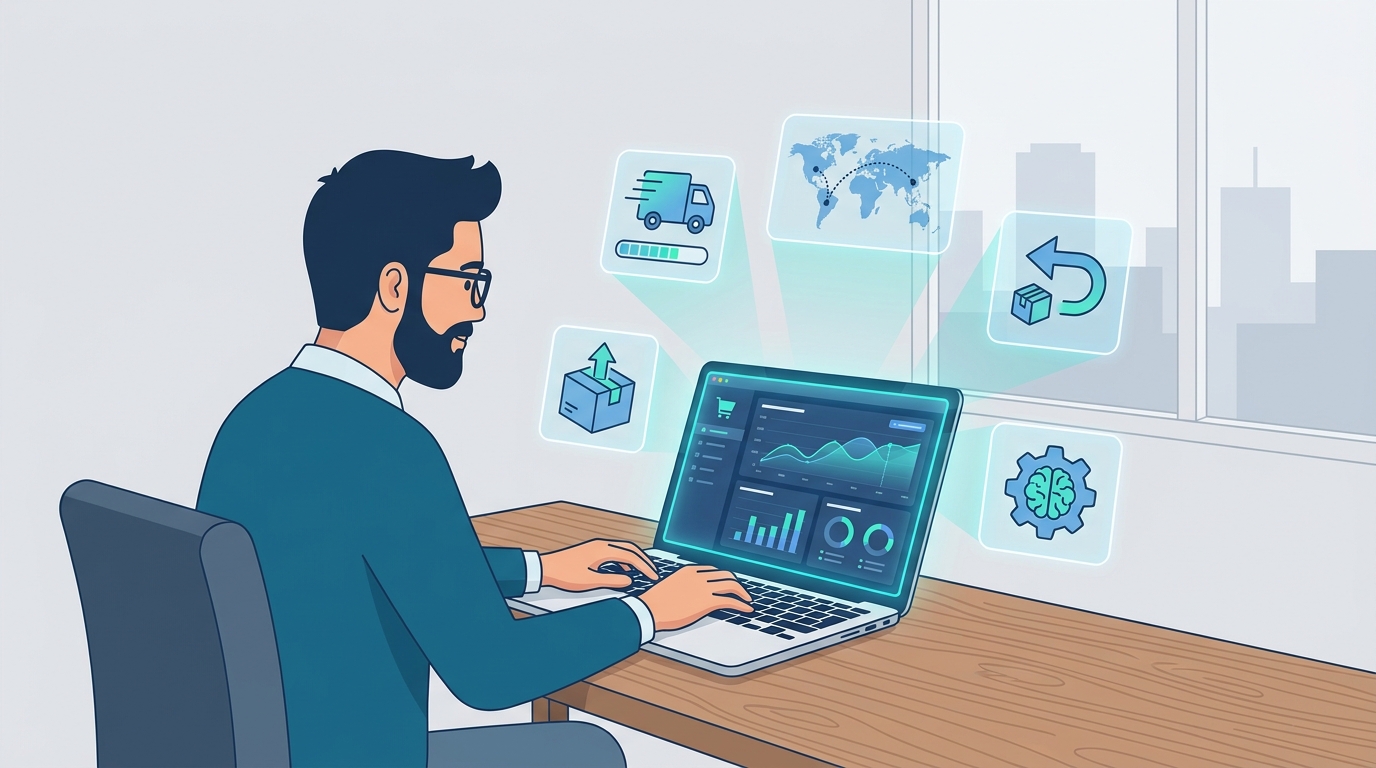
Most freelance niches compete on price. Ecommerce AI services compete on measurable ROI — and that changes everything about how you sell, what you charge, and how long clients stay. When you can show a store owner that an AI returns-routing system cut their refund processing costs by 30%, the conversation stops being about your hourly rate and starts being about the value you create.
Here’s why ecommerce is uniquely lucrative for AI freelancers right now:
- Everything is measurable. Cart abandonment, fulfillment time, stockout frequency, return rates — ecommerce runs on metrics, so your impact is provable and your invoices are easy to justify.
- The pain is operational, not creative. Store owners are great at marketing and product, but logistics and support drain their time. AI automation directly returns hours and margin.
- Recurring revenue is natural. AI systems need monitoring, tuning, and seasonal adjustment — which means retainers, not one-time projects.
- Low competition, high skill barrier. Few freelancers understand both ecommerce operations and AI implementation. That intersection is where premium rates live.
- It scales with the client. As your client’s order volume grows, your systems handle more — and your value (and fees) grow with them.
If you’re still deciding which freelance direction to commit to, our breakdown of AI business ideas for freelancers shows how ecommerce AI services compare to other emerging models on profitability and demand.
The 6 High-Demand AI Service Areas for Ecommerce Freelancers
These six service areas form the core of a profitable ecommerce AI practice. You don’t need to master all six on day one — most successful freelancers start with one, build proof, then expand. Each area below links to a dedicated deep-dive guide so you can go from overview to implementation detail.
1. AI Order Tracking & Customer Support Automation
“Where is my order?” is the single most common support ticket in ecommerce — and the most automatable. By connecting carrier APIs, the store’s order database, and an AI assistant, you can build a system that proactively notifies customers of shipping status, predicts delays, and answers tracking questions without a human ever touching the ticket. Clients typically see support volume drop 40–60% within the first month.
This is the ideal entry service: fast to implement, immediately visible to the client, and easy to demonstrate ROI on. Our complete walkthrough on how to automate logistics support with AI order tracking covers the exact architecture, tools, and integration steps.
2. Warehouse Automation & Fulfillment Consulting
For clients with their own warehouse or 3PL relationship, AI can transform picking, packing, and fulfillment efficiency. This ranges from AI-powered slotting (placing fast-moving SKUs in optimal locations) to computer-vision quality checks and predictive staffing for peak seasons. Even without robotics budgets, software-layer AI delivers double-digit efficiency gains.
This is a higher-ticket service that suits freelancers who can do operational analysis. Get the full framework in our guide to AI for warehouse automation and smarter fulfillment.
3. AI Demand Forecasting & Inventory Optimization
Stockouts lose sales; overstock ties up cash. AI demand forecasting analyzes historical sales, seasonality, marketing calendars, and even external signals (weather, trends) to predict what to order and when. For clients, this is one of the most financially material services you can offer — the difference between a forecast that’s 70% accurate and one that’s 92% accurate is often tens of thousands of dollars in freed-up working capital.
Learn how to build and sell this service in our deep dive on AI demand forecasting to eliminate stockouts and overstock.
4. Returns & Reverse Logistics Optimization
Returns are a silent margin killer — the average ecommerce return rate sits around 20–30%, and processing each return manually is expensive. AI can automate return authorization, predict which items are likely to be returned (so the brand can fix product descriptions or sizing), and route returned goods to resale, refurbishment, or disposal automatically. This is a sophisticated, sticky service that clients rarely cancel.
Our guide to mastering reverse logistics and reducing return rates with AI breaks down the full system and the metrics that prove your value.
5. Last-Mile Delivery & Route Optimization
For clients who manage their own deliveries — local brands, grocery, furniture, same-day services — last-mile is the most expensive and least efficient part of the chain. AI route optimization factors in traffic, delivery windows, vehicle capacity, and driver availability to cut fuel costs and delivery times. It’s a specialized service with relatively few freelancers competing for it.
See the complete implementation approach in our guide on solving last-mile delivery with AI route optimization.
6. End-to-End Ecommerce AI Engine Implementation
The premium offer: instead of a single point solution, you architect a connected AI system across the entire operation — inventory, fulfillment, support, and analytics all sharing data and acting in concert. This is where you move from “freelancer who does a task” to “strategic partner who runs the operational brain of the business,” and it commands the highest retainers.
The strategic blueprint is in our flagship guide to the AI-powered ecommerce engine — read it before pitching enterprise-level clients.
Real-World Impact: The Metrics That Sell These Services
When you pitch ecommerce AI services, vague promises lose to concrete benchmarks. The numbers below reflect the kind of improvements well-implemented systems deliver — keep them in your back pocket as conversation starters, but always replace them with your client’s own measured baseline before quoting results. Promising a specific outcome you can’t control erodes trust; framing realistic ranges and then beating them builds it.
| Service Area | Typical Impact Range | Primary Metric to Track |
|---|---|---|
| Order tracking & support | 40–60% fewer support tickets | Ticket volume, first-response time |
| Warehouse & fulfillment | 15–30% faster pick-and-pack | Order cycle time, error rate |
| Demand forecasting | 20–40% reduction in stockouts | Forecast accuracy, working capital tied up |
| Returns & reverse logistics | 10–25% lower return processing cost | Cost per return, resale recovery rate |
| Last-mile & routing | 10–20% lower delivery cost | Cost per delivery, on-time rate |
| End-to-end AI engine | Compounding gains across all of the above | Operating margin, hours saved per week |
Notice that every metric is something the client already cares about and already (loosely) tracks. Your job is to make the measurement rigorous, attach a dollar figure, and then show movement. That discipline — baseline, build, measure, report — is what converts a skeptical store owner into a multi-year retainer client who refers you to their network.
How to Package These as Profitable Freelance Services
Selling “AI consulting” by the hour is the fastest way to undercharge. Instead, package your offers into clear tiers with defined outcomes. This lets clients self-select by budget and lets you build predictable recurring revenue. Here’s a proven three-tier structure for ecommerce AI services:
| Tier | What It Includes | Typical Price | Billing Model |
|---|---|---|---|
| Audit & Roadmap | Operational analysis, AI opportunity map, prioritized recommendations | $1,500 – $3,500 | One-time project |
| Single-System Build | One service area implemented end-to-end (e.g. order tracking automation) | $3,000 – $8,000 | Fixed project |
| Managed AI Operations | Multiple systems + ongoing monitoring, tuning, and reporting | $2,000 – $6,000/mo | Monthly retainer |
The path most freelancers follow: land the Audit & Roadmap first (low risk for the client, proves your expertise), convert it into a Single-System Build, then graduate the relationship into a Managed Operations retainer. That progression turns a $2,000 project into a $50,000+ annual relationship. For deeper frameworks on structuring retainers, see our guide to AI pricing strategy and retainer models for freelancers.
The AI Tool Stack Every Ecommerce Freelancer Needs
You don’t need expensive enterprise software to deliver these services. A lean, modern stack of AI and automation tools covers most client needs. Here’s the core toolkit:
| Tool | Role in Your Stack | Why It Matters |
|---|---|---|
| Claude / ChatGPT | Reasoning, customer-support agents, data analysis | The brain behind support automation and forecasting logic |
| Make / Zapier | Connecting apps, APIs, and triggers | The glue that links the store, carriers, and AI without code |
| Shopify / WooCommerce APIs | Reading orders, inventory, and customer data | The data source every system depends on |
| Carrier APIs (Shippo, EasyPost) | Real-time tracking and label data | Powers order-tracking and last-mile services |
| Google Sheets / Airtable | Lightweight databases and dashboards | Fast client-facing reporting without heavy infrastructure |
| Forecasting tools (Inventory Planner, etc.) | Demand prediction | Accelerates inventory optimization deliverables |
The real skill isn’t the individual tools — it’s orchestrating them into a system that runs without you. If you’re still building your foundational toolkit, our roundup of the best AI tools for freelancers to scale your business in 2026 covers the broader essentials beyond ecommerce.
How to Find and Land Ecommerce Clients
Ecommerce clients are everywhere — the challenge is reaching them with a message that lands. Unlike generic freelance pitching, ecommerce owners respond to specificity and proof. Here’s where to find them and how to convert:
- Shopify and BigCommerce communities: Facebook groups, subreddits, and Slack communities where owners openly discuss operational pain points you can solve.
- LinkedIn outreach: Target founders and operations managers of DTC brands. Lead with a specific observation about their fulfillment or support, not a generic pitch.
- Agency partnerships: Marketing and web-dev agencies serving ecommerce clients often lack AI ops capability — become their white-label backend.
- Content and case studies: Publish before/after results. Nothing sells operational services like a documented 40% reduction in support tickets.
Once you’re in front of a prospect, the pitch matters as much as the skill. Our framework on AI-powered lead generation tactics that actually work translates directly to landing ecommerce retainers.
A Real Workflow Example: Onboarding an Ecommerce Client
Here’s how a typical engagement unfolds, from first call to recurring retainer, so you can picture the actual delivery:
- Discovery call (Week 1): Identify the biggest operational drain. For most stores, it’s support volume or stockouts. Quantify the cost in hours and dollars.
- Audit & roadmap (Week 1–2): Map their data sources, current tools, and the highest-ROI automation. Deliver a prioritized plan with projected savings.
- First system build (Week 2–4): Implement the quickest win — usually AI order tracking. Connect the store API, carrier data, and an AI support layer.
- Measure & report (Week 4–5): Show the metrics: tickets deflected, hours saved, response time improved. This is what justifies the retainer.
- Convert to retainer (Week 5+): Propose ongoing management plus the next system (forecasting or returns). The relationship compounds from here.
The operational mechanics of onboarding, contracts, and handoff are universal across freelance work — our complete guide to automating your freelance business in 2026 shows how to systematize this so each new client takes less of your time.
Pricing Your Ecommerce AI Services for Maximum Margin
The cardinal rule: price on value delivered, not hours worked. If your demand-forecasting system frees $40,000 in working capital for a client, charging $5,000 to build it is a bargain they’ll happily pay. Three pricing principles for ecommerce AI services:
- Anchor to ROI, not effort. Lead every proposal with the dollar impact, then present your fee as a fraction of it.
- Favor retainers over projects. AI systems need ongoing tuning — bake that into a monthly fee for predictable income and stickier clients.
- Charge for the audit. A paid audit filters out tire-kickers and establishes that your strategic input has value before you write a line of automation.
For the complete pricing playbook — including how to structure tiers, present proposals, and raise rates over time — work through our guide to AI pricing strategy and retainer models.
Common Mistakes That Sink Ecommerce AI Freelancers
The freelancers who struggle in this niche rarely fail on technical ability — they fail on positioning and delivery discipline. Avoid these recurring mistakes and you’ll separate yourself from the crowd immediately:
- Selling technology instead of outcomes. Clients don’t care that you used a vector database or a fine-tuned model. They care that returns dropped and support got faster. Lead with the result, every time.
- Skipping the baseline measurement. If you don’t capture the “before” numbers, you can’t prove the “after.” This single oversight kills more retainer renewals than any technical failure.
- Building fragile systems. An automation that breaks every time the client adds a product creates more support work than it saves. Build for resilience and document everything so the system survives without you babysitting it.
- Underpricing the first project. Many freelancers discount heavily to win their first ecommerce client, then can’t raise rates later. Charge fairly from the start and anchor to ROI — a client who pays a real fee values the work more.
- Ignoring seasonality. Ecommerce lives and dies by peak seasons. A forecasting or fulfillment system tuned for July will fail in November. Build seasonal review into your retainer scope from day one.
- Trying to serve every vertical. A freelancer who specializes in, say, fashion DTC brands or subscription boxes will out-earn a generalist. Niche down once you have a few clients and patterns emerge.
Your First 90 Days: A Practical Launch Plan
If you’re starting from zero, here’s a realistic 90-day plan to go from “interested in ecommerce AI” to “first paying retainer.” This isn’t theory — it’s the same sequence successful freelancers follow when entering the niche.
Days 1–30: Build One Demonstrable System
Pick the order-tracking automation service and build a working demo — even on a test Shopify store. Document the architecture, record a short walkthrough video, and write up the projected impact. This becomes your portfolio centerpiece. Spend evenings learning the carrier and store APIs; you don’t need to be an expert, just functional. By day 30 you should have one system you can show, not just describe.
Days 31–60: Generate Conversations
Now go where ecommerce owners gather. Post your demo and a plain-language explanation of the problem it solves in Shopify communities and on LinkedIn. Reach out to 5–10 store owners daily with a specific, helpful observation — not a pitch. Offer a free 20-minute “operational audit” to a handful of promising prospects. The goal isn’t to close yet; it’s to have real conversations and refine which pain points resonate most.
Days 61–90: Land and Deliver Your First Paid Engagement
Convert your strongest conversation into a paid Audit & Roadmap. Deliver it exceptionally, then propose the first system build. Even at an introductory rate, your priority is a documented win with real before/after metrics. That case study is worth more than the fee — it’s what lets you raise rates and win the next three clients with far less effort.
Scaling From Solo Freelancer to AI Operations Studio
Once you have three to five retainer clients, you’ll hit the classic freelance ceiling: there are only so many hours in your week. The freelancers who break through don’t just raise rates — they productize and delegate. Here’s how the transition typically works:
- Templatize your systems. After a few builds, your order-tracking and forecasting setups become repeatable templates. New client implementation drops from weeks to days, multiplying your effective rate.
- Document standard operating procedures. Turn each delivery into a checklist a contractor could follow. This is the foundation for delegating.
- Bring in specialized help. A part-time developer for complex integrations or a virtual assistant for monitoring and reporting lets you take on more clients without more of your own hours.
- Shift your role to strategy and sales. As the studio grows, your highest-value work becomes diagnosing client problems and architecting solutions — not building every automation yourself.
This is the same path that turns a solo operator into a small agency. If that’s your ambition, our guide on the transition from freelancer to AI-powered business models maps the broader strategic options for scaling beyond yourself.
Frequently Asked Questions
Do I need to know how to code to offer ecommerce AI services?
No. Many of the highest-value systems are built with no-code automation platforms like Make and Zapier connected to AI models via simple API steps. Coding helps for advanced custom work, but you can launch a profitable practice with order-tracking and support automation using no-code tools alone. As your clients grow, you can either learn light scripting or partner with a developer for the complex builds.
Which service area should I start with as a beginner?
Start with AI order tracking and customer support automation. It’s the fastest to implement, the easiest for clients to understand, and it produces visible results within weeks — which makes it the perfect proof point to upsell into demand forecasting or a full managed retainer. Avoid starting with warehouse or last-mile services unless you already have operational experience there.
How much can a freelancer realistically earn from ecommerce AI services?
It varies with experience and client size, but the math is favorable. A single managed-operations retainer at $3,000/month is $36,000/year from one client. Most established ecommerce AI freelancers run three to five concurrent retainers plus project work, putting six-figure annual income well within reach — at margins far higher than commodity freelance services because the work is system-based and recurring.
How do I prove ROI to skeptical clients?
Measure a baseline before you build anything — current support ticket volume, average response time, stockout frequency, return processing cost. After implementation, report the same metrics. Concrete before/after numbers (“support tickets down 52%, response time from 14 hours to 8 minutes”) are far more persuasive than feature lists, and they make retainer renewals automatic.
Is the ecommerce AI freelance market already saturated?
Far from it. While generic “AI consultants” are everywhere, freelancers who genuinely understand both ecommerce operations and practical AI implementation remain rare. The combination of operational knowledge plus the ability to ship working systems is the moat. Specialize, document real results, and you’ll stand out in a market that’s growing far faster than the supply of qualified freelancers.
Where Ecommerce AI Is Headed — and How to Stay Ahead
The freelancers who build durable practices don’t just implement today’s solutions — they track where the technology is going so they can guide clients through what’s next. A few shifts are reshaping the ecommerce AI landscape through 2026 and beyond:
- Autonomous AI agents are moving into operations. Instead of single-task automations, agents that can reason across systems — reordering stock, rerouting a delayed shipment, and notifying the customer in one chain — are becoming practical. Freelancers who learn to orchestrate agents will own the next wave of high-value builds.
- Real-time personalization is merging with logistics. Delivery promises, stock availability, and pricing are increasingly personalized per customer in real time, requiring tighter integration between the storefront and the operational backend.
- Predictive everything. The frontier is shifting from reacting to events (a stockout happened) to predicting and preventing them days in advance — which raises the strategic value of the freelancer who can build those models.
To keep your skills and your client advice current, follow the broader shifts we track in our analysis of how autonomous AI agents are transforming freelancers’ daily work. Staying a step ahead of these trends is what justifies your retainer year after year.
Start Building Your Ecommerce AI Practice Today
The ecommerce AI opportunity for freelancers in 2026 isn’t speculative — it’s a measurable, monetizable gap that thousands of stores need filled right now. The freelancers who win won’t be the ones with the most technical knowledge; they’ll be the ones who package clear outcomes, prove ROI, and turn one-off automations into long-term operational partnerships.
Pick one service area from this guide — order tracking is the proven starting point — read the dedicated deep-dive, and build your first system as a portfolio piece. From there, the path to retainers and six figures is a matter of execution. For the bigger picture on where AI is taking independent work, explore our analysis of new AI business models for freelancers and start positioning yourself before the rest of the market catches up.