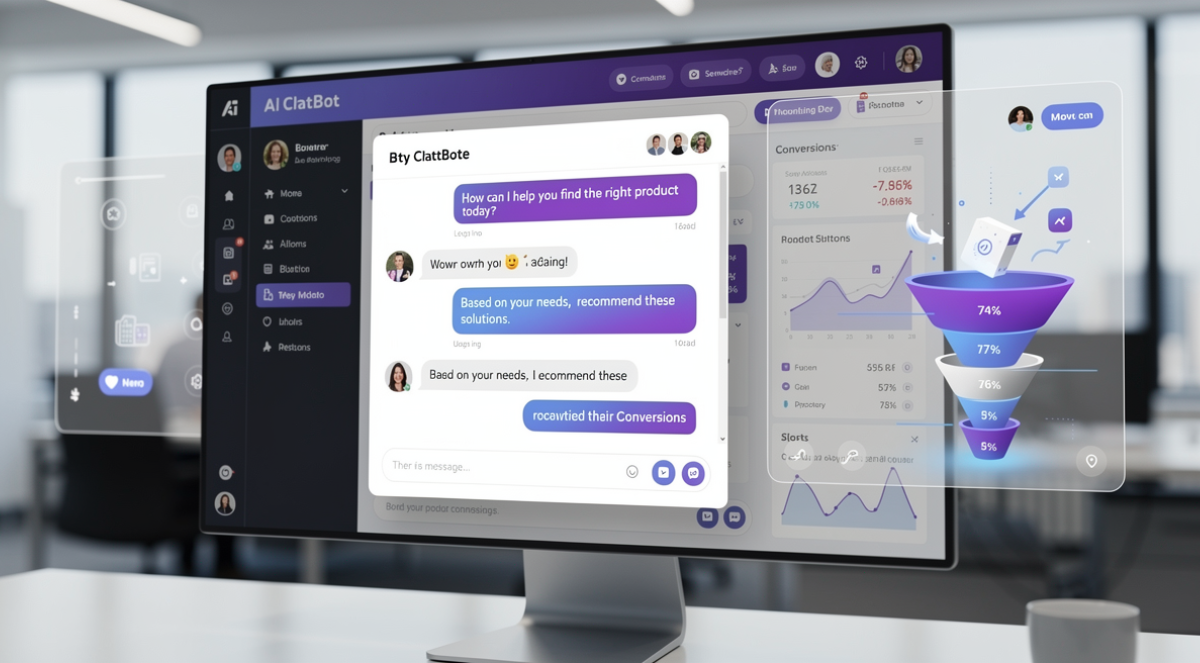
Most website visitors leave without taking action. They have questions, concerns, or simply need guidance toward the right solution. Waiting for them to fill out forms or call during business hours means losing the majority of potential customers. AI chatbots engage visitors immediately, answer questions intelligently, and guide qualified prospects toward conversion. The best systems learn from every interaction, becoming more effective over time. These conversational tools represent a critical component of modern customer acquisition strategies. For broader context on AI-driven growth tactics, see our complete guide to growth hacking with AI for customer acquisition.
The gap between website traffic and conversions frustrates every marketer. You invest in driving visitors to your site, but most leave within seconds without meaningful engagement. Traditional static websites expect visitors to navigate independently, find relevant information, and take action without assistance. This self-service model fails because people want immediate answers and guidance.
Why static websites lose customers to competitors
Visitors arrive at your website with specific questions and concerns. Pricing questions, feature comparisons, implementation complexity, and support availability all influence purchase decisions. Static pages answer some questions but force visitors to hunt through multiple pages for complete information. Most people lack patience for this research and simply leave.
Response time determines conversion outcomes. Studies consistently show that businesses responding to inquiries within five minutes convert leads at dramatically higher rates than those taking an hour or more. Phone and email support cannot achieve this response speed consistently. Even live chat requires available agents who can only handle a few conversations simultaneously.
Qualification happens inconsistently with human-only approaches. Some visitors receive detailed consultative conversations while others get rushed through because agents are busy. This variability creates uneven customer experiences and missed opportunities. High-value prospects might receive poor attention while low-fit leads consume disproportionate resources.
AI chatbots solve these problems by providing instant responses to unlimited concurrent visitors. Every person receives immediate attention regardless of time zone or current traffic volume. The quality remains consistent because the AI draws from your complete knowledge base rather than depending on individual agent expertise.
How modern AI chatbots differ from basic bots
Early chatbot implementations frustrated users with rigid scripted responses and inability to understand natural language. These basic bots followed decision trees that broke down whenever conversations deviated from predetermined paths. Users quickly learned to avoid them and wait for human agents instead.
Modern AI chatbots use natural language processing to understand intent rather than matching specific keywords. A visitor asking “how much does this cost”, “what are your prices”, or “is this expensive” all receive relevant pricing information because the AI understands they want cost information regardless of exact phrasing.
Context awareness allows conversations to flow naturally. The bot remembers what the visitor said three messages ago and maintains continuity throughout the interaction. If someone mentions they run a small business early in the conversation, subsequent recommendations consider company size without asking again.
Learning from interactions makes AI chatbots increasingly effective over time. When visitors rate responses negatively or request human agents, the system identifies gaps in its knowledge. Product updates, pricing changes, and new frequently asked questions get incorporated automatically. This continuous improvement means your chatbot gets smarter while human agents stay static unless retrained.
Integration with your customer data platforms allows chatbots to personalize conversations based on visitor behavior. Returning visitors receive different greetings than first-timers. Someone who viewed pricing pages sees offers to discuss plans while someone reading case studies receives relevant customer stories. This contextual personalization increases relevance and conversion probability.
Strategic chatbot placement for maximum conversions
Where you deploy chatbots significantly impacts results. Homepage chatbots greet visitors broadly and direct them toward relevant areas. Pricing page chatbots address cost concerns and objections before they cause abandonment. Product page bots answer technical questions that influence purchase decisions. Checkout page assistants rescue abandoned carts by resolving last-minute hesitation.
Timing triggers determine when chatbots proactively engage versus waiting for visitors to initiate. Exit intent triggers activate when visitors show abandonment signals like moving their cursor toward the browser back button. Time-based triggers engage after a visitor spends a certain duration on a page, suggesting they have questions. Scroll depth triggers activate when someone reaches specific page sections, offering contextual help.
The most effective implementations use different bot personalities and scripts for different pages. A pricing page bot focuses on ROI justification and plan comparisons. A features page bot provides technical details and use case examples. A contact page bot offers immediate conversation instead of form submission. This specialization ensures relevant conversations rather than generic interactions.
Mobile optimization matters critically because majority traffic comes from phones and tablets. Chatbot interfaces must work smoothly on small screens without obscuring content. Responses should be concise since mobile users tolerate less reading. Voice input options accommodate situations where typing is inconvenient.
Conversation design that guides visitors toward conversion
Effective chatbot conversations balance being helpful with moving toward business outcomes. The bot should never feel pushy or sales-focused, yet every interaction should progress prospects through their decision journey. This requires careful conversation flow design that qualifies interest while building value.
Open-ended questions early in conversations help the bot understand visitor needs before prescribing solutions. Asking “what brings you to our site today” or “what problem are you trying to solve” provides context for relevant recommendations. This consultative approach builds trust better than immediately pitching products.
Progressive qualification gathers information naturally throughout the conversation rather than interrogating visitors with forms. As the bot learns about company size, use cases, and requirements, it can route qualified prospects to sales while nurturing early-stage visitors with educational content. This subtle qualification prevents scaring away uncertain prospects with aggressive sales tactics.
Objection handling represents a critical chatbot capability. Common concerns about pricing, features, implementation, or support should have prepared responses that acknowledge concerns and provide reassurance. The AI can detect objection language and offer relevant case studies, comparison charts, or direct connection to sales specialists.
Clear calls to action appear at natural conversation points. After answering questions about pricing, the bot offers to start a trial or schedule a demo. After discussing features, it suggests relevant case studies or product tours. These CTAs feel helpful rather than pushy because they align with what the visitor just learned.
Integrating chatbots with sales and marketing systems
Standalone chatbots provide conversational experiences but miss opportunities for deeper automation. Integration with your CRM ensures every conversation creates or updates a contact record. Marketing automation connections trigger nurture sequences based on chatbot interactions. Calendar integrations allow bots to schedule sales meetings directly.
Lead scoring improves through chatbot data. Traditional scoring uses page views and form submissions. Adding conversation data provides much richer qualification signals. A visitor who asks detailed technical questions and discusses timeline shows stronger intent than someone who merely viewed a few pages. The AI assigns scores based on question types, engagement depth, and expressed needs.
Conversation transcripts become valuable sales intelligence. When a qualified lead reaches a sales rep, the complete chatbot conversation history provides context about their interests, concerns, and requirements. This preparation allows more productive sales conversations because reps understand prospect needs before the first call.
Marketing attribution gets more accurate with chatbot data. You can track which campaigns drive visitors who have meaningful chatbot conversations versus those who bounce immediately. This distinction between traffic quality sources helps optimize marketing spend toward channels that attract engaged prospects rather than merely generating clicks.
Choosing the right chatbot platform
Drift pioneered conversational marketing and maintains strong features for B2B companies. Its chatbots qualify leads, route to appropriate sales reps, and schedule meetings automatically. The platform integrates deeply with major CRMs and marketing automation tools. Pricing starts high, making it more suitable for established businesses than startups.
Intercom provides balanced functionality for both sales and customer support chatbots. The same platform handles pre-sale conversations and post-purchase support seamlessly. Its bot builder offers good flexibility without requiring technical skills. Pricing scales based on contact volume, which can become expensive quickly as your audience grows.
Tidio targets small businesses with affordable pricing and easy setup. The chatbot templates cover common use cases like lead generation, appointment scheduling, and FAQ answering. While less sophisticated than enterprise platforms, Tidio delivers solid value for straightforward implementation needs. Free tier allows testing before committing budget.
ManyChat specializes in messaging app chatbots for Facebook Messenger, Instagram, and WhatsApp. If your audience actively uses these platforms, ManyChat provides powerful automation for those channels. The visual flow builder makes conversation design accessible. Social commerce businesses particularly benefit from this approach.
Custom development using platforms like Dialogflow or Microsoft Bot Framework provides maximum flexibility for unique requirements. This path requires developer resources but allows complete control over functionality, data handling, and integration. Businesses with complex qualification logic or specialized industry needs often choose custom builds.
Measuring chatbot impact on conversion rates
Implementation without measurement leaves you guessing about effectiveness. Track conversation volume, engagement rate showing percentage of visitors who interact, and conversation completion rate indicating how many reach a desired outcome. These metrics reveal whether your bot attracts engagement and successfully guides conversations.
Conversion metrics connect chatbot interactions to business results. Lead conversion rate shows how many conversations produce qualified leads. Meeting booking rate tracks successful sales appointments scheduled. Support ticket deflection measures how many inquiries the bot resolves without human escalation. These outcome metrics justify chatbot investment to stakeholders.
Conversation analytics identify common questions, confusion points, and knowledge gaps. When many visitors ask questions the bot cannot answer well, you know where to improve. When certain conversation paths consistently lead to conversions, you can emphasize those flows. This feedback loop continuously improves effectiveness.
A/B testing different greeting messages, conversation flows, and CTA language optimizes performance. Small changes in how the bot introduces itself or frames offers can significantly impact engagement and conversion rates. The best platforms include built-in testing capabilities that automate these experiments.
For insights on using AI to create personalized experiences that further improve conversion rates, explore our guide on AI content personalization strategies for customer acquisition.