The last mile is the most critical and costly leg of the e-commerce journey. Customer expectations for speed and transparency have never been higher. Artificial intelligence meets this challenge by dynamically optimizing delivery routes for efficiency. It calculates precise time windows and facilitates proactive customer communication. Implementing these sophisticated tools for logistics is essential for any brand looking to compete on the basis of a superior delivery experience. This final touchpoint can become your greatest competitive advantage.
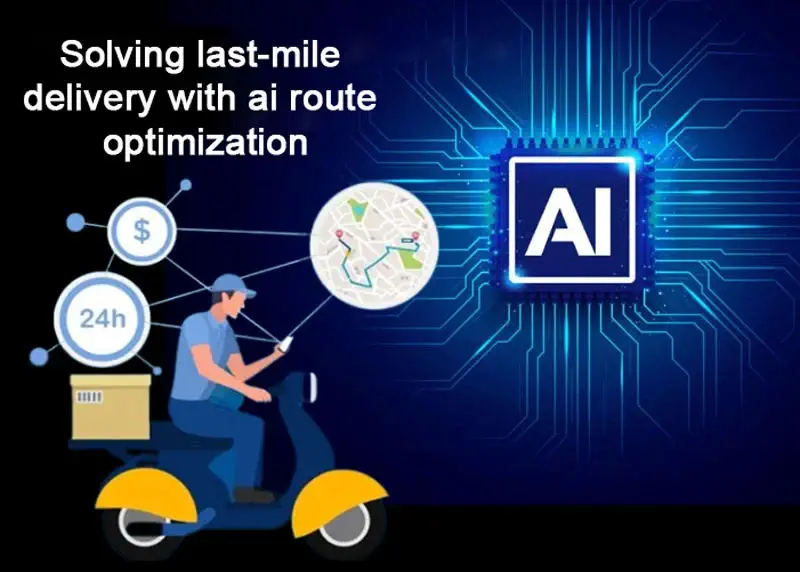
Table of Contents
ToggleWhat is last mile in logistics ?
The last mile in logistics is the final and most critical stage of the delivery process. This phase, which extends from the distribution center to the final customer’s door, encompasses the delivery of a wide range of goods. From small packages for individuals to product replenishment in large retail stores, it is the point of contact with the final recipient. Hence its importance.
It is at this stage where much of the customer experience is defined, influencing their satisfaction and perception of the brand. Therefore, efficiency in this final stretch has a direct impact on the entire logistics chain. But in addition to affecting customer satisfaction, it also impacts company costs. There is nothing worse than a failed delivery for a last-mile provider.
At the same time, inventory management and order preparation ensure that products are ready for distribution at the right time. There’s more. The efficient allocation of resources, both human and material, is another pillar in last-mile optimization, as well as the ability to track routes in real-time to make on-the-go adjustments.
All this without forgetting agile returns management, a link that has become a key differentiator in the e-commerce era.
Why the last mile is your biggest challenge
The last mile refers to the final step of the delivery process. This is when a package moves from a local distribution hub to the customer’s doorstep. This segment is notoriously inefficient. Delivery drivers often face congested city streets, difficult-to-find addresses, and rural routes with long distances between stops.
The costs are staggering. Last-mile delivery can account for over 50% of the total shipping cost. Failed deliveries are a major contributor to this. When a driver arrives and no one is home, it triggers a cascade of problems. The package returns to the depot, a re-delivery must be scheduled, and customer frustration mounts. These failed attempts destroy profitability and erode brand loyalty. Traditional static route planning cannot adapt to the dynamic realities of the daily delivery run.
The intelligence behind dynamic routing
AI-powered route optimization is the solution to this chaos. Unlike a static map with a fixed list of addresses, dynamic routing uses live data to create the most efficient path possible. The algorithm considers a vast number of variables simultaneously.
It processes real-time traffic conditions, current weather, and known road closures. It understands the specific constraints of each delivery, such as required time windows or the need for a signature. It even factors in the type of vehicle being used and its capacity.
The result is a constantly adapting delivery plan. If a traffic jam forms on a planned route, the system instantly recalculates and provides the driver with a faster alternative. This ensures that drivers are not wasting fuel and time sitting in traffic. They follow the path of least resistance, which means more packages delivered per hour.
Creating a transparent customer experience
Modern customers demand visibility. They want to know not just the day their package will arrive, but the specific window of time. AI makes this level of precision possible. By analyzing the optimized route and real-time progress, the system can provide customers with accurate estimated times of arrival.
This allows for proactive communication. Instead of a customer wondering where their order is, they receive a notification. A message might say, “Your driver is on the way and will arrive between 2:15 and 2:45 PM.” This transparency reduces anxiety and builds trust.
It also empowers the customer. With a precise ETA, they can plan their day accordingly. This dramatically reduces the rate of failed delivery attempts. Customers are more likely to be home if they know a two-hour window instead of a twelve-hour one. This simple upgrade in communication saves your logistics team a significant amount of time and money.

Managing a flexible delivery fleet
The rise of crowdsourced delivery drivers and gig economy workers has added a new layer of complexity to last-mile logistics. Managing a fluid network of independent drivers requires a powerful coordination tool.
AI platforms can automatically assign deliveries to the best-suited driver based on their location, vehicle type, and current capacity. It bundles nearby orders together to make each driver’s route as efficient as possible. The system handles the entire workflow from assignment to proof of delivery.
This allows businesses to scale their delivery capacity up or down to meet daily demand without maintaining a large permanent fleet. During a peak sales period, you can activate more drivers, confident that the AI will efficiently integrate them into the delivery network.
Connecting the delivery to the customer
A smooth last-mile experience is the culmination of an efficient supply chain. It is the physical moment where your brand promise is fulfilled. When a package arrives quickly, on time, and with clear communication, it creates a powerful positive memory for the customer.
Mastering this final step is a monumental task, but the principles of using data and automation apply across your entire operation. Just as AI can orchestrate the movement of delivery vehicles, it can also streamline the interactions that happen after the purchase. The next logical step is to explore how automation can handle customer inquiries, turning the post-purchase phase into a seamless and satisfying experience.
Last mile logistics optimization trends
To overcome these challenges, management aimed at optimizing last-mile deliveries in logistics is evolving by leaps and bounds, driven by technological innovation and market evolution itself.
Addressing the boom in e-commerce, for example, requires innovation and commitment to digitalization to improve communication and traceability in operations, but also to respond to sustainability and efficiency demands. The trends we have identified are:
- Artificial intelligence and machine learning: These technologies are being used to predict demand patterns and optimize routes in real-time, reducing operational costs.
- Strategic distribution centers: Locating distribution centers and warehouses closer to the final customer is a growing trend among companies in the sector, as it helps reduce delivery times and operational costs.
- Automated cross-docking: This inventory management technique consists of receiving goods from different suppliers at a Distribution Center (CEDIS) and then sending them to final customers without needing to be stored. Here, sorting, regrouping, and loading operations are performed automatically.
- Electric vehicles and alternative fuels: Replacing fossil fuel vehicle fleets with electric ones is an increasingly common practice in the logistics and transportation sector. These vehicles must be complemented by other models powered by alternative fuels, such as natural gas, to reduce the carbon footprint.
- Ultra-fast deliveries: These deliveries respond to current final customer demand. Therefore, last-mile providers that offer them enjoy great differentiating power compared to the competition. The requirement to make same-day or few-hour deliveries forces companies to reinvent processes and improve.
- Autonomous technology: The potential of autonomous vehicles, drones, and robots for autonomous last-mile deliveries is enormous. With the promise of reducing costs and improving delivery precision, autonomous technology can redefine the future of logistics.
- Final customer awareness: Customers are increasingly informed about the impact of their purchasing decisions on reducing polluting emissions, which influences their choice when contracting a last-mile company. Finding partners capable of reducing the carbon footprint of logistical operations while maintaining quality is a rising trend.