Managing time as a us freelancer goes beyond staying busy. The real challenge is understanding where your hours actually go, which projects are profitable, and which tasks silently drain your week. Smart time tracking and scheduling tools bring clarity by turning your daily work into clear data you can trust. When you combine them with modern AI and SaaS tools for project management, writing, and branding, you build a freelance system that works for you instead of against you.
Smart Time Tracking Tools For High-Performing Freelancers
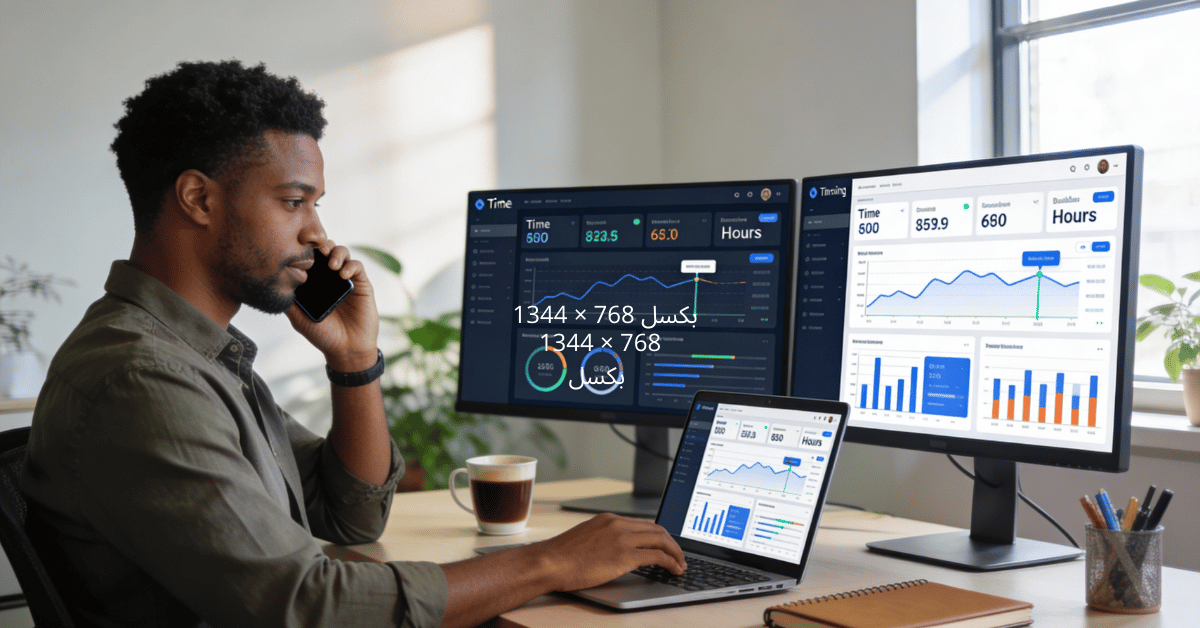
Time is the only resource you never get back as a freelancer. You can always find more clients or raise your rates, but wasted hours are gone forever. The freelancers who grow consistently are not the busiest ones. They are the ones who know exactly where their time goes and adjust their offers, pricing, and processes based on real numbers, not guesswork.
My name is Alman. At 40, after years of testing tools and building systems for freelancers, one thing is clear: tracking your time with the right tools is not about control. It is about freedom. Freedom to say no to bad-fit projects, freedom to price your services with confidence, and freedom to design weeks that do not end in burnout.
In this article, you will see how smart time tracking tools help you understand your business, not just your schedule. You will see real examples, simple tables, and practical steps you can apply this week.
Why Time Tracking Matters More Than You Think
Many freelancers avoid time tracking because it feels restrictive. It reminds them of corporate timesheets and micromanagement. But as a solo worker, you are not tracking time for a boss. You are tracking time for your own profit and clarity.
There are three important reasons to track your time consistently:
-
You discover your real hourly rate.
-
You see which projects are profitable and which are not.
-
You understand how much time non-billable tasks really take.
Imagine two projects:
-
Project A: $1,500 website copy, 10 hours of work → $150/hour
-
Project B: $1,500 brand strategy, 25 hours of work → $60/hour
Without tracking, they look equal. With tracking, you see where your profit really is.
Here is a simple example table of how tracking reveals what is really happening in a typical week:
| Activity | Hours spent | Billable? | Value at $80/h |
|---|---|---|---|
| Client project work | 18 | Yes | $1,440 |
| Writing proposals | 5 | No | $0 |
| Admin (emails, invoicing) | 4 | No | $0 |
| Marketing + content creation | 3 | No | $0 |
| Total | 30 | — |
$1,440 |
You think you are working “full time”, but only 18 of those hours are actually billable. That is why you feel busy but your revenue does not grow.
Key Features Of Smart Time Tracking Tools
Not all time tracking tools are equal. Basic tools act like digital stopwatches. Smart tools help you make decisions.
Look for tools with these features:
-
Automatic tracking: The tool records which apps and sites you use without constant manual input.
-
Project and task tagging: You assign time to specific clients, services, or projects.
-
Reporting and insights: Clear charts that show how you spend time across projects and categories.
-
Rate and revenue pairing: Time is connected to your rates so you see actual profit.
-
Integration: The tool connects with project management, invoicing, and calendar tools.
Tools like Toggl Track, Harvest, RescueTime, Clockify, and Timely are good candidates. Each has a different “personality.”
-
Toggl Track: Simple interface, strong project and client tagging, great reports.
-
Harvest: Time tracking combined with invoicing.
-
RescueTime: Focus on productivity and app usage.
-
Clockify: Flexible and generous free plan.
-
Timely: Automatic tracking with a timeline of your day.
You do not need them all. The win comes from choosing one that fits how your mind works and sticking with it.
Real Example: How Time Data Changes Your Pricing
Let’s look at a realistic case based on many freelancers’ experience.
You offer a “Website strategy + copy” package for $2,000. You assume it takes about 15 hours. Without tracking, you feel it is “okay but intense.”
You decide to track one full project. At the end, your breakdown looks like this:
| Task | Hours |
|---|---|
| Discovery call + emails | 2 |
| Research (industry, competitors) | 4 |
| Strategy workshop and outline | 3 |
| Writing main pages | 6 |
| Revisions and client feedback handling | 4 |
| Admin (invoicing, file organization) | 1 |
| Total | 20 |
Your real hourly rate is 2,000/20=100 dollars.
But you also notice something interesting. Out of those 20 hours, 4 hours are spent handling revisions and back-and-forth. You have no clear scope for revisions in your proposal.
With this insight, you can:
-
Add a clear “two rounds of revisions included” line to your proposal.
-
Charge an additional fee for extra revisions.
-
Raise the package price to $2,400 and support it with real data.
Now your next project becomes:
-
$2,400 / 18 hours (after tightening the process) = about $133/hour.
Time tracking gave you the argument to make that change without guilt.
Choosing The Right Time Tracking Setup For Your Freelance Model
Different freelance setups need different tracking approaches. Here are three common scenarios.
1. Project-based freelancers (designers, copywriters, developers)
You work with clear deliverables. You want to track time per project and phase, but not become obsessed with every minute.
Recommended setup:
-
Use Toggl Track or Harvest.
-
Create projects named by client and project type.
-
Create tasks like “Discovery,” “Research,” “Execution,” “Revisions,” “Admin.”
-
Track time only when you are actively working (no need to track breaks).
This helps you understand which phases consume most time. If “Revisions” always blows up, you revisit contracts and expectations.
2. Retainer-based freelancers (ongoing social media, consulting)
You work with monthly retainers that include a set number of hours or outcomes.
Recommended setup:
-
Use Harvest or Clockify.
-
Create one project per retainer client.
-
Add tags for “Monthly included work” and “Out-of-scope work.”
-
Run weekly reports to ensure you are not exceeding agreed hours.
This helps when a client asks for “one more small thing.” You can show them data and say, in a calm way, “We are 20% over this month’s included time. Here is a suggestion for a paid add-on.”
3. Multi-service freelancers (content + strategy + consulting)
You wear several hats and need to see which service lines are most profitable.
Recommended setup:
-
Use Toggl Track or Timely.
-
Create projects by service type (e.g., “Content creation,” “Strategy consulting,” “Coaching”).
-
Inside each, create tasks per client.
-
Analyze reports monthly by project to see which service has highest effective hourly rate.
Often, freelancers discover their strategy or consulting time is more profitable than execution work. That insight helps them shift their offers toward higher-value work.
Building A Weekly Time Tracking Ritual
The hardest part is not turning the timer on. It is keeping the habit alive.
Here is a simple weekly time ritual you can adopt.
Daily (5 minutes)
-
Start your main timer when you begin your first focused task.
-
Switch projects or tasks when you change work.
-
At the end of the day, glance at your report to make sure entries look correct.
Weekly review (20–30 minutes)
Once a week, sit with your reports and ask:
-
How many hours did I work in total?
-
How many were truly billable?
-
Which projects took longer than expected?
-
Which tasks could be automated or delegated?
A simple weekly table can help you visualize your time:
| Category | Hours this week | Comment |
|---|---|---|
| Billable client work | 22 | Good, but heavy on one large project |
| Proposals & sales | 4 | Includes 2 lost deals |
| Marketing | 3 | Mostly LinkedIn and newsletter |
| Admin | 3 | Could automate invoicing next month |
You do not need a complex system. You need a clear picture.
Combining Time Tracking With Your Other Tools
Time tracking becomes really powerful when you connect it to the other parts of your freelance stack.
Here are three strong combinations:
With project management tools
If you already organize tasks in tools like Notion, Trello, or ClickUp, add time tracking to them.
-
Attach a time entry to each task.
-
Compare “estimated time” and “actual time.”
-
Use this gap to improve future estimates.
If you are using structured systems to manage your work, pairing them with time data turns your planning into a real forecasting engine.
With writing and content tools
When you use writing assistants to prepare proposals or content, track how long those tasks take now versus before.
For example:
| Task | Before tools | After tools |
|---|---|---|
| Drafting full proposal | 3 hours | 1.5 hours |
| Writing blog article | 4 hours | 2.5 hours |
| Revising long-form piece | 2 hours | 1 hour |
You will see which tools truly save time and where your human thinking is still the main factor. This helps you choose what to keep and what to drop.
With branding and marketing tools
If you use tools to plan and automate your online presence, track time spent on content creation and scheduling.
-
How long does it take to prepare one month of content?
-
How long does writing a newsletter take versus posting short updates?
-
Which type of content brings leads per hour invested?
From there, you can decide if it makes sense to produce more carousels, more posts, or more long-form content.
Case Study: A Freelancer Who Changed Their Week With Tracking
Let’s take a realistic story and keep it simple.
Alina is a freelance social media strategist in Austin. She works with four retainer clients and earns about $6,000 per month. She feels busy, sometimes overwhelmed, but stuck at that income level.
She decides to track time for a full month using Clockify.
Her monthly report looks like this:
| Category | Hours |
|---|---|
| Client A (retainer) | 22 |
| Client B (retainer) | 18 |
| Client C (retainer) | 14 |
| Client D (retainer) | 12 |
| Proposals and discovery | 10 |
| Marketing her own brand | 6 |
| Admin & operations | 8 |
| Total | 90 |
She charges all clients roughly $1,500 each. But when she looks at effective rates:
-
Client A: $1,500 / 22 ≈ $68/hour
-
Client D: $1,500 / 12 ≈ $125/hour
Same invoice, very different profitability.
What changed after she saw the data:
-
She introduced a clear scope for Client A and proposed a higher retainer that matched real effort.
-
She set a rule for discovery calls: a structured 30-minute format instead of open-ended hour-long chats.
-
She increased prices for new clients, using her average hours per client as a baseline.
Three months later, she still worked roughly 90 hours per month. But her monthly revenue climbed to $8,200. Time tracking did not make her work more. It made her work smarter.
Actionable Steps To Implement This Week
If you want to make this real and not just “interesting,” here is a simple action plan.
Step 1: Choose one tool and commit for 30 days
Pick Toggl Track, Harvest, Clockify, or Timely. Do not overthink it. The important thing is usage, not perfection.
Step 2: Create three simple categories
Start with:
-
Client work
-
Business development (proposals, calls, networking)
-
Admin and operations
You can refine later.
Step 3: Track everything for two weeks
No judgment. No optimization. Just data. Turn the timer on when you work and off when you stop.
Step 4: At the end of two weeks, run one report
Look at:
-
Total hours
-
Billable vs non-billable
-
Hours by client or project
Use this to adjust your pricing, scope, or schedule.
Step 5: Connect it to your broader tool stack
Once the habit feels natural, connect your tracking with your project management system, your proposal workflow, and your branding efforts. This is where your freelance “machine” truly comes alive.
Smart time tracking is not about counting minutes for the sake of it. It is about running your freelance business with the same clarity and discipline as a well-managed agency, without losing your freedom. When you treat your time data as a strategic asset, you stop guessing and start deciding.
If you are already optimizing your contracts, design, writing, and client workflows, adding smart time tracking tools is the next logical step. They will support your main system for developing your freelance business with a complete stack of modern tools and help you get the full benefit from everything you already use.