Most potential customers need multiple touchpoints before purchasing. Visitors abandon carts, prospects go cold, and interest fades without proper follow-up. Manual retargeting campaigns require constant monitoring and adjustment to remain effective. AI retargeting platforms identify when prospects disengage, determine optimal re-engagement timing, and deliver personalized messages that bring them back. These systems recover revenue that would otherwise disappear while requiring minimal ongoing management. Automated retargeting closes the loop on customer acquisition efforts by ensuring no opportunity goes to waste. This strategy complements the broader framework outlined in our complete guide to growth hacking with AI for customer acquisition.
The reality of modern customer journeys is that most people do not convert on first exposure. Research consistently shows that B2B buyers require seven to twelve touchpoints before making purchase decisions. E-commerce customers often visit a site three to five times before buying. Without systematic follow-up, you lose prospects who were genuinely interested but not ready to commit immediately.
Why prospects disappear and how to bring them back
Cart abandonment represents the most visible example of lost opportunities. Someone adds products to their cart, demonstrating clear purchase intent, then leaves without completing checkout. Average cart abandonment rates exceed 70 percent across e-commerce, representing massive revenue leakage.
The reasons for abandonment vary widely. Some people use carts as wishlists, intending to return later. Others get distracted by interruptions. Many abandon due to unexpected costs revealed at checkout like shipping fees or taxes. Some comparison shop across multiple sites before deciding. Each abandonment reason suggests different re-engagement strategies.
Lead nurturing gaps allow qualified prospects to go cold. Someone downloads a whitepaper or attends a webinar, showing genuine interest, then receives no follow-up or generic messaging that fails to maintain engagement. Without timely, relevant communication, they move on to competitors or shelve the project entirely.
Trial expirations without conversion mean you attracted interested prospects but failed to demonstrate value during their evaluation period. They signed up, perhaps used the product briefly, then disengaged before becoming paying customers. These lost trials represent wasted acquisition costs and product development efforts.
Customer churn occurs when existing customers stop using your product or cancel subscriptions. Unlike abandoned carts or cold leads, churn means you successfully acquired someone but failed to retain them. Win-back campaigns targeting churned customers often succeed because these people already understand your value proposition.
AI-powered cart abandonment recovery
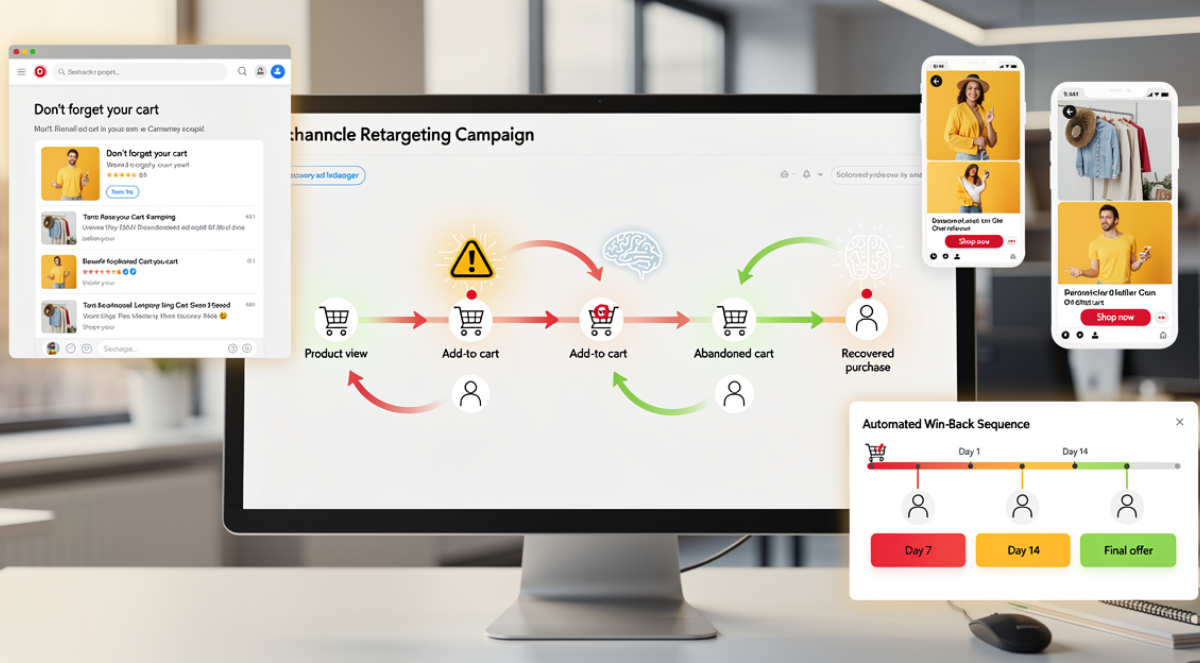
Timing matters critically in cart abandonment campaigns. Contact too soon and you seem desperate or pushy. Wait too long and the purchase moment passes or they buy from competitors. AI determines optimal send timing for each abandonment based on product category, cart value, and individual shopper behavior patterns.
The first abandonment email typically goes out within one to three hours. This quick follow-up catches people who were genuinely interrupted or distracted. The message reminds them of items in their cart and makes returning easy through direct links. No aggressive sales tactics, just helpful persistence.
Subsequent emails escalate value and urgency gradually. The second message might highlight product benefits or include customer reviews building confidence. The third could offer a time-limited discount to overcome price objections. AI determines appropriate escalation pace and offer sizing based on cart value and predicted conversion probability.
Personalized product recommendations in abandonment emails increase recovery rates. If someone abandoned a camera, show complementary accessories they might need. If they abandoned baby products, suggest related items parents typically purchase together. This cross-sell approach sometimes recovers the original cart plus additional revenue.
Multi-channel retargeting reinforces email campaigns through paid advertising. AI coordinates email sequences with display ads, social media retargeting, and search ads featuring the abandoned products. This omnichannel presence keeps your offer top-of-mind across the prospect’s digital experience.
Dynamic Creative Optimization uses AI to generate personalized ad variations showing the exact products each person abandoned. Rather than generic retargeting ads, prospects see their specific items with personalized messaging. This relevance dramatically improves click-through and conversion rates compared to standard retargeting.
Re-engaging cold leads with intelligent nurturing
Lead scoring identifies when prospects disengage so you can intervene before they completely lose interest. Traditional scoring based on manual rules misses subtle engagement declines. AI detects patterns like decreased email opens, longer gaps between website visits, or reduced content consumption that predict leads going cold.
Win-back sequences trigger automatically when engagement scores drop below thresholds. These specialized campaigns differ from standard nurture sequences by acknowledging the disengagement and offering fresh value. The messaging might highlight new features, share recent customer success stories, or invite prospects to reconsider with no-pressure consultation offers.
Content personalization becomes more important for cold lead reactivation than initial nurture. These prospects already consumed generic content without converting. Re-engagement requires addressing specific objections or concerns that prevented initial conversion. AI analyzes their previous engagement to identify likely hesitations and delivers content addressing those issues.
Event invitations provide natural re-engagement opportunities. Webinars, conferences, workshops, and online events give cold leads reasons to interact without immediate purchase pressure. AI identifies which prospects should receive which event invitations based on predicted interests and likelihood to attend.
Account-based approaches work well for high-value cold leads in B2B contexts. Rather than individual lead-level campaigns, coordinate outreach across multiple stakeholders within target accounts. AI orchestrates messaging timing and content across contacts to create comprehensive account-level presence that reignites interest.
Trial conversion optimization through behavioral triggers
Trial user behavior predicts conversion probability with remarkable accuracy. Usage frequency, feature adoption, invited team members, and integration setup all correlate strongly with whether trials convert to paid subscriptions. AI monitors these signals and triggers interventions when behavior suggests risk or opportunity.
Low-engagement alerts identify trial users not experiencing value. If someone signs up but barely logs in, they will not convert. Automated campaigns reach out offering help, suggesting starting points, or providing educational resources. Personal outreach from success teams targets high-value accounts showing low engagement.
Feature adoption prompts guide users toward critical functionality. Many products have “aha moments” where value becomes obvious. AI identifies users who have not experienced these moments and sends targeted prompts encouraging relevant feature exploration. Successfully guiding users to these moments dramatically increases conversion rates.
Upgrade timing optimization determines when to present conversion offers. Pushing too early creates pressure that drives trial abandonment. Waiting until the last moment misses opportunities to convert convinced users sooner. AI predicts optimal upgrade timing based on usage patterns and engagement intensity.
Personalized conversion offers adjust based on predicted customer value and price sensitivity. High-usage trials from large companies might receive white-glove onboarding offers. Price-sensitive small business trials could see discounts or extended trial periods. This dynamic approach maximizes conversion rates across diverse trial user segments.
Winning back churned customers profitably
Customer lifetime value analysis determines which churned customers deserve win-back investment. Not all lost customers are worth recovering. Those who churned due to poor fit will likely churn again. Those who left for reasons you have since addressed represent better opportunities. AI segments churned customers by win-back probability and potential value.
Exit feedback collection provides critical intelligence for win-back campaigns. When customers cancel, ask why. This information reveals addressable issues versus fundamental fit problems. AI analyzes exit reasons to identify patterns and prioritize product improvements that would facilitate win-back success.
Appropriate waiting periods differ by churn reason. Customers who left due to pricing might be approached quickly with competitive offers. Those who churned because they stopped needing your product category should wait until circumstances likely changed. AI determines optimal wait times before initiating win-back attempts.
Product improvement announcements provide natural win-back opportunities. If customers left due to missing features you have since launched, targeted campaigns highlighting these improvements often succeed. The AI identifies which churned customers left for reasons you have addressed and prioritizes them for reactivation outreach.
Incentive optimization balances win-back costs against recovered lifetime value. Offering steep discounts might recover customers but destroy profitability. AI determines minimum effective incentives for different customer segments, maximizing recovery rates while maintaining acceptable economics.
Platform and tool recommendations
Klaviyo excels at e-commerce retargeting with deep integration to shopping platforms. It tracks cart abandonment, browse behavior, and purchase history automatically. The AI coordinates email, SMS, and paid ad retargeting seamlessly. Pricing scales with list size and email volume.
Drip focuses on small to mid-sized e-commerce businesses wanting sophisticated automation without enterprise complexity. The visual workflow builder makes complex retargeting sequences manageable. Built-in personalization features handle product recommendations and dynamic content well.
ActiveCampaign serves broader business types beyond just e-commerce. The platform handles lead nurture, trial conversion, and customer retention campaigns. CRM integration provides complete customer journey visibility. Pricing remains reasonable even as you add advanced features and grow contact lists.
Customer.io specializes in behavioral messaging for SaaS and subscription businesses. Event tracking monitors product usage patterns for intelligent trial conversion and churn prevention. The platform coordinates email, push notifications, SMS, and in-app messages from one system.
Retention.com uses AI specifically for cart abandonment and customer win-back in e-commerce. The platform manages campaigns across email, SMS, and paid channels with minimal setup. For businesses wanting automated retargeting without building complex workflows themselves, Retention.com provides turnkey solutions.
Measuring retargeting effectiveness
Recovery rate shows what percentage of abandoned carts, cold leads, or churned customers you successfully bring back. This core metric reveals campaign effectiveness directly. Track recovery rates by segment, campaign type, and channel to understand what works best.
Time to recovery indicates how long winning back customers typically takes. Faster recovery means more efficient campaigns and less opportunity for competitive interference. AI optimizes for both recovery rate and speed by determining ideal frequency and channel mix.
Incremental revenue attributes sales specifically to retargeting efforts rather than counting all recovered customers as wins. Some people would return without your campaigns. Proper attribution requires control groups receiving no retargeting to establish baseline return rates. Incremental revenue above baseline justifies retargeting investment.
Customer quality after win-back matters as much as quantity. Recovered customers acquired through deep discounts might deliver poor long-term value. Those returning due to product improvements often become better customers than before churning. Track retention rates, purchase frequency, and lifetime value of recovered customers versus new acquisitions.
Cost per recovery reveals efficiency and sustainability of retargeting campaigns. Divide total campaign costs by successful recoveries to understand acquisition economics. Compare this to new customer acquisition costs to ensure win-back efforts deliver acceptable ROI relative to alternatives.
This completes your comprehensive retargeting strategy. Combined with the lead generation, conversion, personalization, prediction, and email tactics covered throughout this guide, you now have a complete AI-powered customer acquisition framework. Start with your biggest leakage points and expand systematically as you build expertise and see results.