Customer acquisition has become exponentially more complex and expensive over the past five years. Paid advertising costs continue climbing as competition intensifies across every channel. Organic reach on social platforms has plummeted as algorithms prioritize paid content. Traditional outbound tactics like cold calling face increasing resistance from prospects overwhelmed by constant solicitation. 
The businesses thriving in this challenging environment share one common advantage: they leverage AI to acquire customers more efficiently than competitors relying on manual methods.
Growth hacking with AI is not about replacing human creativity and strategy with automation. The most successful implementations combine human insight with machine intelligence. Marketers define strategy, create core messaging, and interpret results. AI handles the repetitive execution, continuous optimization, and personalization at scale that humans cannot manage manually. This partnership allows small teams to achieve results previously requiring much larger organizations.
The financial impact of AI-powered customer acquisition compounds quickly. A 20 percent improvement in lead generation efficiency means 20 percent more opportunities for your sales team. A 30 percent increase in conversion rates translates directly to 30 percent more revenue from the same traffic. When you stack multiple AI optimizations across the customer journey, the cumulative effect often doubles or triples acquisition effectiveness within months.
This guide covers six concrete strategies for using AI to acquire more customers. We examine lead generation tactics that fill your pipeline with qualified prospects automatically. We explore chatbot implementations that convert website visitors into customers through intelligent conversations. We detail content personalization approaches that deliver relevant experiences at scale. We explain predictive analytics that identifies your best prospects before competitors reach them. We break down email automation that doubles engagement and conversion rates. Finally, we cover retargeting strategies that recover lost opportunities and maximize the value of every prospect.
Each strategy includes specific platform recommendations, implementation guidance, and measurement approaches. The goal is providing actionable information you can implement immediately rather than theoretical concepts requiring extensive interpretation. 
AI-powered lead generation tactics that actually work in 2025
Lead generation remains the foundation of customer acquisition. Without consistent flow of qualified prospects, even the best sales teams struggle to hit revenue targets. Traditional lead generation methods like cold calling, purchased lists, and trade show booths still work but deliver diminishing returns as costs rise and response rates decline. AI-powered lead generation produces better results at lower costs by identifying prospects showing genuine buying signals and personalizing outreach based on specific needs.
The fundamental advantage of AI lead generation is scale without proportional cost increases. A human sales development representative might qualify 20 to 30 leads daily. Adding more leads requires hiring more people, which increases costs linearly. AI systems qualify hundreds of leads simultaneously while your existing team focuses on high-value conversations with pre-qualified prospects. This leverage allows small operations to compete with much larger competitors on lead volume and quality.
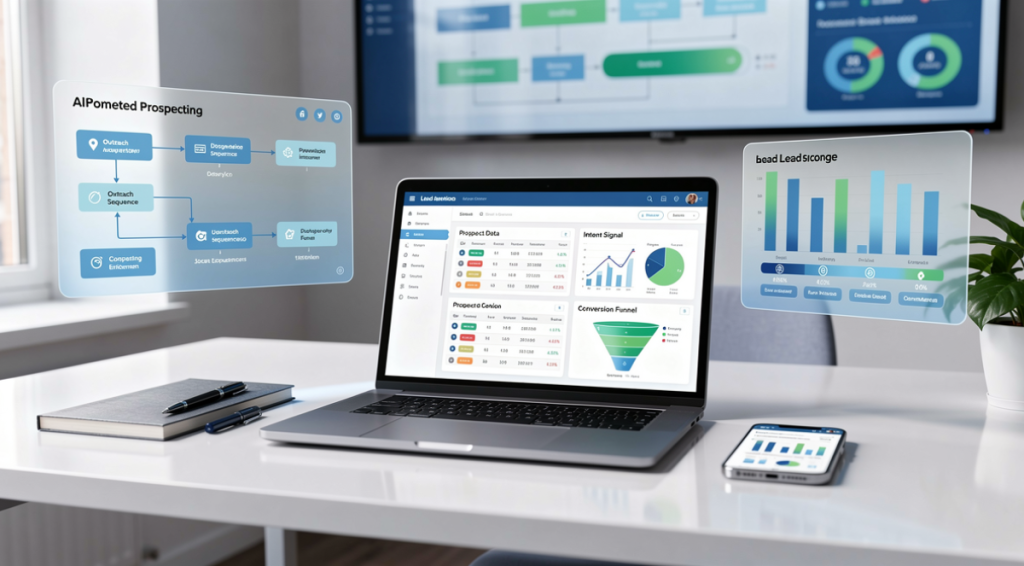
Modern AI lead generation platforms integrate data from dozens of sources to build comprehensive prospect profiles. They monitor company websites for hiring activity, technology changes, and organizational shifts indicating buying readiness. They track content consumption patterns across the web to identify research behavior. They analyze social media engagement to understand interests and priorities. This multi-dimensional view reveals prospects actively solving problems your product addresses, allowing you to engage when timing is optimal rather than interrupting with cold outreach.
Intent data platforms represent one of the most powerful applications of AI in lead generation. These systems monitor billions of online interactions to identify when specific companies research topics related to your offering. When a target account suddenly increases content consumption about problems you solve, they likely have budget and urgency to make a purchase. Your sales team receives alerts to contact these prospects while they actively evaluate options rather than waiting for inbound inquiries that may never come.
Prospecting tools combine AI-powered discovery with automated outreach sequencing. You define your ideal customer profile by industry, company size, technology usage, and other attributes. The AI finds matching companies and decision-makers, enriches contact records with verified information, and builds targeted lists automatically. Personalization engines analyze prospect LinkedIn profiles, company websites, and recent news to craft customized opening messages for each individual. This relevance dramatically improves response rates compared to generic templates that prospects immediately recognize as mass outreach.
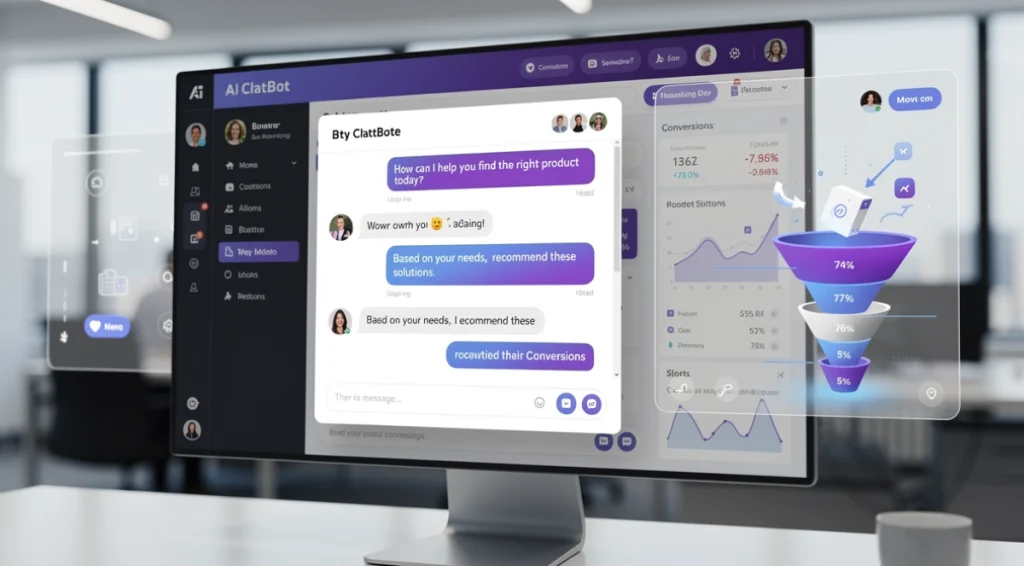
Conversational AI handles lead qualification through chat, email, or voice interactions that feel natural to prospects. Website chatbots ask qualifying questions about budget, timeline, authority, and needs. Based on responses, the system routes high-quality leads to sales immediately while nurturing early-stage prospects automatically. Voice AI platforms make outbound qualification calls, conducting natural conversations that schedule meetings for human sales representatives. The capacity advantage becomes significant quickly as one AI handles unlimited concurrent conversations while human teams remain constrained by available headcount.
For detailed implementation guidance and platform recommendations specific to lead generation, see our complete breakdown of AI-powered lead generation tactics that work in 2025.
Using AI chatbots to convert website visitors into customers
Website traffic without conversion wastes marketing investment. You spend money driving visitors to your site through ads, content, and SEO, but most leave within seconds without taking meaningful action. The gap between traffic volume and conversion rate represents your biggest opportunity for immediate improvement. AI chatbots bridge this gap by engaging visitors instantly, answering questions intelligently, and guiding qualified prospects toward purchase decisions.
The fundamental problem with static websites is that they expect visitors to navigate independently, find relevant information scattered across multiple pages, and take action without assistance. This self-service model fails because people want immediate answers to specific questions. They have concerns about pricing, implementation complexity, feature availability, and support quality that generic page content addresses inadequately. When these questions go unanswered, visitors simply leave to try competitors who might provide better guidance.
Response time determines conversion outcomes more than most marketers realize. Research consistently shows that businesses responding to inquiries within five minutes convert leads at dramatically higher rates than those taking an hour or more. Phone support and email cannot achieve this response speed consistently. Even live chat requires available agents who can only handle a few conversations simultaneously. AI chatbots provide instant responses to unlimited concurrent visitors regardless of time zone or current traffic volume, ensuring every prospect receives immediate attention.
Modern AI chatbots differ fundamentally from the rigid scripted bots that frustrated users in earlier implementations. Natural language processing allows these systems to understand intent rather than matching specific keywords. A visitor asking “how much does this cost”, “what are your prices”, or “is this expensive” all receive relevant pricing information because the AI recognizes they want cost details regardless of exact phrasing. Context awareness maintains conversation continuity as the bot remembers previous messages and builds on that information naturally.
Strategic placement across your website maximizes chatbot impact. Homepage bots greet visitors and direct them toward relevant sections based on expressed interests. Pricing page chatbots address cost concerns and objections before they cause abandonment. Product page bots answer technical questions that influence purchase decisions. Checkout page assistants rescue abandoned carts by resolving last-minute hesitation. Each placement serves a specific purpose in the conversion journey rather than applying one generic approach everywhere.
Conversation design balances being helpful with progressing prospects toward business outcomes. The bot should never feel pushy or sales-focused, yet every interaction should move visitors through their decision journey. Open-ended questions early in conversations help understand visitor needs before prescribing solutions. Progressive qualification gathers information naturally throughout the dialogue rather than interrogating people with forms. Clear calls to action appear at logical points after the bot has provided value and built credibility through helpful responses.
Integration with your CRM and marketing automation platforms transforms chatbots from isolated tools into central components of your acquisition system. Every conversation creates or updates contact records automatically. High-value interactions trigger nurture sequences or alert sales teams to follow up personally. Conversation transcripts provide valuable context when prospects reach human representatives, allowing more productive discussions because the history is already understood. This seamless data flow eliminates manual entry and ensures no information gets lost between systems.
The measurement of chatbot effectiveness requires tracking both engagement metrics and business outcomes. Conversation volume and engagement rate show whether visitors interact with the bot. Conversation completion rate indicates how many reach desired outcomes like lead capture or meeting scheduling. Most importantly, conversion attribution connects chatbot interactions to actual revenue, proving return on investment to justify continued development and optimization.
For comprehensive guidance on implementing chatbots that actually convert visitors into customers, explore our detailed guide on using AI chatbots for conversion optimization.
Personalization at scale: AI content strategies for customer acquisition
Generic content produces generic results. Every visitor to your website arrives with different needs, priorities, and contexts that influence their purchase decisions. A startup founder evaluates solutions differently than an enterprise IT director. Someone in healthcare has distinct concerns from someone in retail. Early-stage researchers need different information than people ready to buy. Treating all these visitors identically means serving none of them optimally. AI-powered personalization solves this problem by delivering customized experiences to each visitor automatically, creating relevance that dramatically improves conversion rates.
The one-size-fits-all approach to content fails because people lack patience to search through generic information hoping to find what applies to their specific situation. They want immediate confirmation that you understand their particular challenges and can address their unique requirements. When your homepage, landing pages, and product descriptions speak directly to their industry, company size, and use case, you signal this understanding instantly. When content remains generic, visitors assume you serve everyone equally poorly and look elsewhere for specialists who demonstrate specific expertise.
Personalized experiences convert at rates three to five times higher than generic ones according to research across industries. The explanation is straightforward: relevant content answers specific questions each visitor has, addresses their particular concerns, and uses language that resonates with their situation. This relevance keeps people engaged long enough to communicate your value proposition effectively. Generic content gets dismissed within seconds because nothing distinguishes it from dozens of other sites visitors have already evaluated.
Understanding visitor intent through behavioral signals enables effective personalization without requiring explicit information from prospects. AI analyzes page view sequences to infer interests, monitors time on page to gauge engagement level, and tracks scroll depth to measure content consumption. First-time visitors typically need educational content explaining what you do and why it matters. Returning visitors already understand your basics and need deeper information like feature comparisons, pricing details, and implementation requirements. Traffic source provides additional context as paid search visitors often have immediate needs while social media arrivals tend toward exploration and research.
Dynamic content blocks change based on visitor attributes while maintaining consistent page structure. Headlines emphasize different benefits for different industries. Hero images show representatives of the visitor’s sector. Case studies feature companies similar to the visitor’s organization. Product recommendations highlight offerings most relevant based on firmographic data and behavioral signals. This real-time adaptation happens automatically without creating separate page versions for every segment, making extensive personalization practical at scale.
AI copywriting tools generate personalized variations of core messages automatically. You provide essential information and specify personalization variables like industry, company size, or role. The system produces numerous variations that maintain your brand voice while addressing specific audience segment needs. This automation makes deep personalization feasible where manual content creation for every segment would require impossible resources. The quality of AI-generated content has improved dramatically, producing drafts that need editing but dramatically reduce creation time.
Email personalization extends beyond inserting recipient names in greetings. Dynamic email content shows different products, offers, or content blocks to different recipients based on their data and behavior. Someone who browsed pricing pages sees pricing-focused content. Someone who downloaded whitepapers receives related educational resources. Send time optimization delivers messages when each individual typically engages with email rather than at one universal time. Subject line personalization adapts both messaging and length based on what works for different segments. These individualized elements typically double engagement rates compared to generic broadcast emails.
Behavioral triggers create timely personalization by responding to specific visitor actions automatically. Abandoned cart reminders, post-purchase follow-ups, re-engagement campaigns for inactive subscribers, and content download confirmations all address individual situations. These triggered messages convert at much higher rates than scheduled broadcasts because they arrive when people need them most. The AI determines optimal timing, messaging, and offer sizing based on the specific trigger event and prospect attributes.
Measuring personalization ROI justifies the platform investments and content creation efforts required. Track conversion rate lift for personalized experiences versus control groups receiving generic content. Revenue attribution shows how much additional revenue personalization generates, allowing you to calculate return on investment directly. Engagement metrics like time on site, pages per session, and bounce rate typically improve substantially with effective personalization, providing leading indicators that predict conversion improvements. Content performance analytics reveal which personalization variables drive the most impact, guiding optimization efforts toward highest-return opportunities.
For detailed implementation strategies and platform selection guidance, see our comprehensive overview of AI content personalization strategies for customer acquisition. 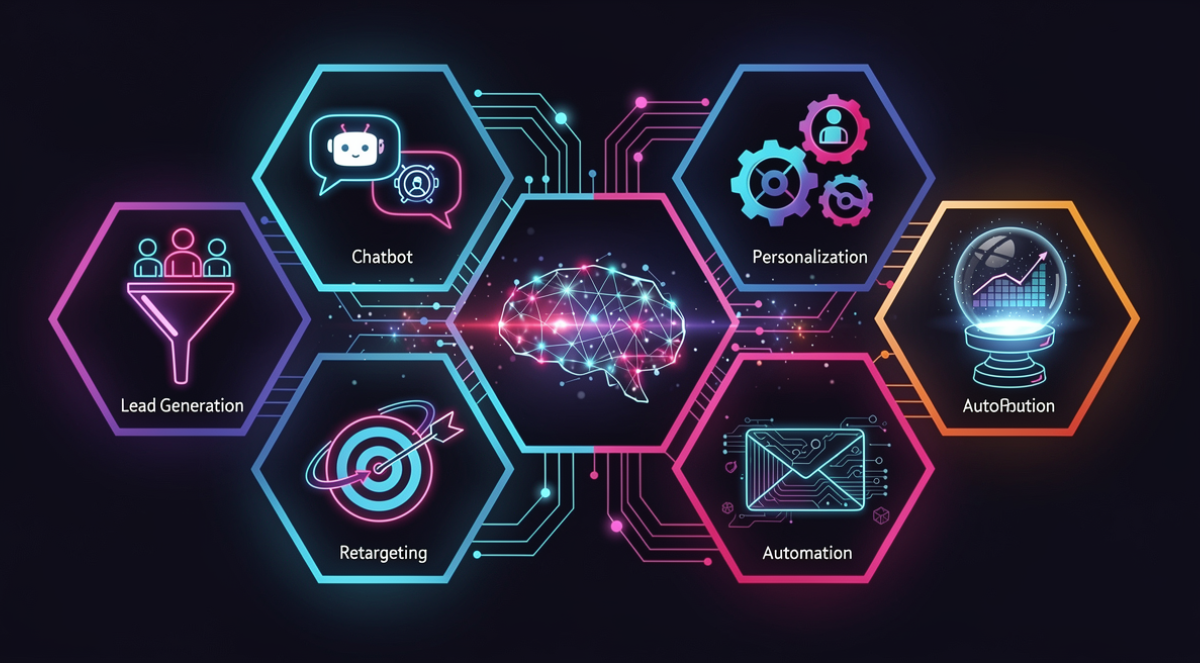
Predictive analytics: How AI identifies your best customer prospects
Resource allocation determines success or failure in customer acquisition. Every sales and marketing team operates with limited time, budget, and personnel. Spreading these finite resources evenly across all prospects means underfunding high-potential opportunities while overspending on unlikely conversions. Predictive analytics uses AI to score prospects based on conversion likelihood, lifetime value potential, and optimal engagement timing. This intelligence allows strategic resource allocation that focuses expensive human efforts on opportunities worth pursuing while automating or deprioritizing poor-fit leads.
Traditional lead scoring assigns points based on simple criteria like job title, company size, or specific actions taken. A director receives more points than a manager. Large companies score higher than small ones. Downloading a whitepaper adds five points. This manual scoring requires constant updating and often correlates poorly with actual conversion because the rules reflect assumptions rather than evidence. Human intuition about what predicts purchase behavior frequently proves wrong when tested against actual data.
Predictive lead scoring analyzes thousands of variables simultaneously to identify which combinations actually predict conversion in your specific business. The AI examines historical data to discover patterns invisible to human analysis. It might reveal that prospects from certain industries who engage with particular content types within specific timeframes convert at exponentially higher rates. These multi-dimensional patterns are too complex for manual rule creation but become obvious when machine learning algorithms process complete datasets.
The models continuously learn and adapt as new data accumulates. When market conditions change, your product evolves, or competitive dynamics shift, the predictive algorithm adjusts automatically. Traditional scoring rules remain static until someone manually updates them, becoming increasingly inaccurate over time. This adaptive capability means your predictions improve continuously rather than degrading through repetition and changing circumstances.
Firmographic data provides the foundation for B2B predictions. Company size, industry, revenue, growth rate, location, and technology usage all correlate with purchase probability. However, behavioral signals often predict conversion better than static attributes. Engagement frequency, content consumption patterns, email responsiveness, website return visits, and social media interactions reveal buying intent more reliably than demographics alone. Someone visiting your pricing page three times in two days shows stronger intent than someone with perfect firmographics who visited once months ago.
Technographic data indicating what technologies prospects currently use adds another predictive dimension. Companies using complementary solutions to yours represent integration opportunities. Those using competitive products face switching costs but might be dissatisfied with current vendors. The AI learns which technology combinations predict successful conversion versus those indicating poor fit or insurmountable competitive entrenchment.
Temporal patterns identify optimal engagement timing by recognizing predictable behavior sequences before conversion. Prospects often research for specific durations, engage intensely for certain periods, then go silent before making final decisions. Understanding these patterns allows timing outreach for maximum receptivity rather than contacting prospects randomly throughout their evaluation process. The AI detects when prospects enter high-intent phases and alerts sales teams to engage immediately.
Customer lifetime value predictions complement conversion probability scoring. A prospect likely to convert but purchase the smallest package differs significantly from one equally likely to convert who will spend ten times more. CLV models consider initial purchase size, expansion potential, retention likelihood, and referral probability. Historical customer data trains algorithms to identify which prospect attributes correlate with each value component, allowing prioritization based on total potential rather than just initial conversion likelihood.
Implementation requires sufficient historical data to train algorithms reliably. Most platforms need at least several hundred closed deals to produce stable models. Smaller datasets generate unstable predictions that overfit to noise rather than identifying genuine patterns. Companies without adequate data should start with traditional scoring while collecting information for future predictive implementations. Data quality determines accuracy more than algorithm sophistication, making CRM cleanup essential before deploying predictive tools.
Strategic applications extend beyond simple lead scoring. Sales territory assignment improves when high-value predictions go to your strongest closers while less experienced representatives handle lower-score leads. Marketing spend optimization concentrates budget where ROI will be strongest based on predicted conversion and lifetime value. Pricing strategy personalizes discounts for high-value predictions where acquisition cost justifies margin concessions. Product development priorities shift toward features that increase retention among high-value customer segments. These strategic applications multiply the impact of better predictions across your entire business.
Platform options range from integrated CRM features to specialized standalone solutions. Salesforce Einstein provides predictive scoring within the Salesforce ecosystem for companies already committed to that platform. 6sense specializes in B2B predictive analytics combined with intent data for complex enterprise sales. Custom models built with machine learning tools offer maximum flexibility for unique business requirements. Selection depends on your existing technology stack, team capabilities, and prediction complexity requirements.
For comprehensive guidance on implementing predictive analytics and maximizing strategic value, explore our detailed breakdown of how AI predictive analytics identifies your best customer prospects.
AI email marketing automation that doubles open rates
Email delivers the highest return on investment among digital marketing channels when executed properly. Studies consistently show email generating $36 to $42 for every dollar spent, dramatically outperforming social media, paid search, and display advertising. However, these impressive returns apply only to well-executed email programs. Poor execution produces inbox clutter that damages your brand, annoys subscribers, and generates minimal business results. AI email marketing tools optimize every element from send timing to subject lines to content personalization, transforming email from broadcast spam into individualized conversations that drive engagement and revenue.
The paradox of email marketing is that it delivers exceptional returns while most campaigns perform poorly. Average open rates hover around 20 percent across industries, meaning 80 percent of recipients ignore your messages entirely. Click rates below 3 percent indicate that even among those who open, very few take desired actions. This widespread mediocrity stems from treating email as a broadcast medium rather than a conversation channel. Sending identical messages to entire lists simultaneously ignores that different recipients have different interests, preferences, and optimal engagement times.
Batch-and-blast campaigns represent the laziest approach to email marketing. These mass sends ignore segmentation, personalization, and timing optimization. Every subscriber receives the same message at the same moment regardless of their interests, behavior history, or engagement patterns. This approach worked when email was novel and inboxes were less crowded. Today, generic blasts get ignored or marked as spam because nothing distinguishes them from the dozens of other promotional emails recipients receive daily.
AI transforms email into scalable one-to-one communication by personalizing timing, content, and messaging for each recipient automatically. Send time optimization analyzes individual engagement patterns to determine when each person is most likely to open and act on messages. Some people check email first thing in the morning. Others engage during lunch or evening hours. Weekend patterns differ from weekdays. The AI learns these individual preferences and schedules delivery accordingly, typically improving open rates by 15 to 30 percent with zero content changes.
Subject line intelligence determines whether recipients open your email or ignore it entirely. AI tools test thousands of variations to identify what works for different audience segments. Predictive subject line scoring evaluates proposed subject lines before sending, comparing them against successful patterns in your historical data. The system predicts likely open rate and suggests improvements, helping you avoid underperforming subject lines before wasting them on your entire list. Dynamic subject line generation creates individualized lines for different recipients rather than forcing one approach on everyone.
Content personalization adapts entire message bodies to recipient interests, behavior, and buying stage. Dynamic content blocks show different products, offers, or information sections to different recipients. Someone who browsed pricing pages sees pricing-focused content. Someone who downloaded educational resources receives related materials. Product recommendations surface items related to past purchases or browsing behavior. Case studies feature companies similar to the recipient’s organization. This granular personalization makes every email feel custom-crafted rather than mass-produced.
Behavioral triggers fire emails based on specific recipient actions rather than predetermined broadcast schedules. Abandoned cart reminders, post-purchase follow-ups, re-engagement campaigns for inactive subscribers, and content download confirmations all respond to individual situations. These triggered messages convert at dramatically higher rates than scheduled broadcasts because they address specific needs at precisely relevant moments. The AI determines optimal trigger timing and messaging based on what works best for different recipient segments.
Journey stage personalization adjusts messaging based on where recipients are in the buying process. Early-stage prospects receive educational content building awareness and understanding. Mid-stage leads get product comparisons and feature deep-dives that facilitate evaluation. Late-stage opportunities receive offers and urgency messaging that encourage final purchase decisions. This alignment between message content and recipient readiness dramatically improves conversion rates by respecting natural buying progressions rather than pushing everyone toward purchase regardless of preparedness.
List segmentation evolves from manual rule creation to AI-discovered natural groupings in your subscriber data. Traditional segmentation requires defining rules about which attributes and behaviors matter, then creating segments based on these predetermined variables. AI-powered segmentation identifies patterns automatically, discovering which combinations of characteristics actually correlate with engagement and conversion. These algorithmically discovered segments often reveal opportunities invisible to human analysis.
Predictive segmentation creates groups based on predicted future behavior rather than just past actions. The AI identifies subscribers likely to churn, those ready to purchase, and those needing additional nurturing. You can target each predictive segment with appropriate messaging rather than treating everyone identically. Micro-segmentation creates extremely narrow groups for hyper-personalized campaigns. Rather than broad segments of thousands, you work with dozens of smaller segments each receiving highly relevant content.
Frequency optimization determines ideal email cadence for each subscriber based on their engagement patterns. Active subscribers who open and click every message can receive more frequent communication. Less engaged subscribers get reduced frequency to prevent fatigue and list attrition. This individualization maximizes both engagement and list retention simultaneously. Engagement-based throttling automatically reduces sending to subscribers showing declining interest, often re-engaging people who would otherwise unsubscribe or mark messages as spam.
Multi-armed bandit algorithms automate A/B testing by continuously experimenting with variations while simultaneously optimizing for results. Rather than traditional tests that split traffic evenly between variants for predetermined durations, these algorithms quickly identify winners and shift more traffic to better-performing options. You get optimization benefits faster without waiting for tests to reach statistical significance through extended run times. Multi-variate testing examines combinations of elements simultaneously, finding synergies between variables that sequential testing misses entirely.
Measuring email effectiveness requires looking beyond vanity metrics like open and click rates. Revenue attribution shows which emails actually drive purchases and how much they contribute to business results. This outcome-focused measurement justifies email investment far better than engagement statistics. Conversion rate by email type reveals which campaign categories deliver results, helping optimize your email mix. List growth rate tracking ensures acquisition efforts exceed natural attrition from address changes and disinterest. Deliverability monitoring prevents your emails from landing in spam folders where they never reach subscribers.
For detailed implementation guidance and platform selection recommendations, see our complete breakdown of AI email marketing automation strategies that double open rates.
Retargeting with AI: Win back lost customers automatically
Most potential customers need multiple touchpoints before purchasing. Research consistently shows B2B buyers require seven to twelve interactions before making purchase decisions. E-commerce customers often visit sites three to five times before buying. Prospects abandon carts, go cold after initial interest, ignore trial opportunities, and churn after becoming customers. Without systematic follow-up, you lose people who were genuinely interested but not ready to commit immediately. AI retargeting platforms identify when prospects disengage, determine optimal re-engagement timing, and deliver personalized messages that bring them back automatically. These systems recover revenue that would otherwise disappear while requiring minimal ongoing management.
The reality of modern customer journeys is that immediate conversion represents the exception rather than the rule. People get distracted by interruptions, comparison shop across multiple vendors, delay decisions due to budget timing, and simply forget about products they intended to purchase. Each of these scenarios represents recoverable revenue if you have systems to follow up appropriately. Manual retargeting requires constant monitoring of who needs outreach, what message to send, and when to contact them. This complexity quickly becomes unmanageable as prospect volume grows, resulting in opportunities falling through cracks.
Cart abandonment represents the most visible example of lost revenue. Someone adds products to their cart, demonstrating clear purchase intent, then leaves without completing checkout. Average abandonment rates exceed 70 percent across e-commerce, representing massive revenue leakage from traffic you already paid to acquire. The reasons vary widely. Some people use carts as wishlists intending to return later. Others get interrupted by phone calls or meetings. Many abandon due to unexpected costs revealed at checkout like shipping fees or taxes. Each abandonment reason suggests different re-engagement strategies that AI can personalize automatically.
Timing matters critically in cart abandonment recovery. Contact too soon and you seem desperate. Wait too long and the purchase moment passes or they buy from competitors. AI determines optimal send timing for each abandonment based on product category, cart value, and individual shopper behavior patterns. The first message typically goes out within one to three hours, catching people who were genuinely interrupted. Subsequent emails escalate value and urgency gradually. The second might highlight product benefits or include customer reviews. The third could offer time-limited discounts to overcome price objections. The AI manages this escalation automatically while adjusting pace based on predicted conversion probability.
Multi-channel coordination reinforces email recovery with paid advertising. AI orchestrates email sequences with display ads, social media retargeting, and search ads featuring abandoned products. Dynamic Creative Optimization generates personalized ad variations showing exact items each person abandoned rather than generic retargeting creative. This omnichannel presence keeps your offer top-of-mind across the prospect’s digital experience without manual campaign management across multiple platforms.
Lead nurturing gaps allow qualified prospects to go cold after initial interest. Someone downloads a whitepaper, attends a webinar, or requests information, then receives no follow-up or generic messaging that fails to maintain engagement. Without timely relevant communication, they move on to competitors or shelve projects entirely. AI detects declining engagement through lead scoring that tracks email opens, website visits, and content consumption. When scores drop below thresholds, automated win-back sequences trigger with messaging that acknowledges disengagement and offers fresh value.
Content personalization becomes more important for cold lead reactivation than initial nurture. These prospects already consumed generic content without converting. Re-engagement requires addressing specific objections or concerns that prevented initial purchase. AI analyzes previous engagement to identify likely hesitations and delivers content addressing those specific issues. Event invitations provide natural re-engagement opportunities as webinars, conferences, and workshops give cold leads reasons to interact without immediate purchase pressure.
Trial conversion optimization through behavioral monitoring identifies users not experiencing product value. Usage frequency, feature adoption, invited team members, and integration setup all correlate strongly with conversion probability. AI monitors these signals and triggers interventions when behavior suggests risk or opportunity. Low-engagement alerts identify trial users barely logging in who will not convert without assistance. Feature adoption prompts guide users toward critical functionality that creates “aha moments” where value becomes obvious. Upgrade timing optimization determines when to present conversion offers based on usage patterns rather than arbitrary calendar dates.
Customer win-back campaigns target people who previously purchased but stopped using your product or cancelled subscriptions. Not all churned customers deserve recovery investment. Those who left due to poor product fit will likely churn again. Those who departed for reasons you have since addressed represent better opportunities. AI segments churned customers by win-back probability and potential lifetime value, focusing efforts where return justifies investment.
Exit feedback collection provides critical intelligence for effective win-back campaigns. When customers cancel, asking why reveals addressable issues versus fundamental fit problems. AI analyzes exit reasons to identify patterns and prioritize product improvements that facilitate win-back success. Appropriate waiting periods differ by churn reason. Customers who left due to pricing might be approached quickly with competitive offers. Those who churned because they stopped needing your product category should wait until circumstances likely changed.
Product improvement announcements provide natural win-back opportunities. If customers left due to missing features you have since launched, targeted campaigns highlighting these improvements often succeed. The AI identifies which churned customers departed for reasons you have addressed and prioritizes them for reactivation outreach. Incentive optimization balances win-back costs against recovered lifetime value. Offering steep discounts might recover customers but destroy profitability. AI determines minimum effective incentives for different segments, maximizing recovery rates while maintaining acceptable economics.
Measurement focuses on recovery rates showing what percentage of abandoned carts, cold leads, or churned customers you successfully bring back. Track recovery by segment, campaign type, and channel to understand what works best. Time to recovery indicates campaign efficiency as faster recovery means less opportunity for competitive interference. Incremental revenue attribution requires control groups receiving no retargeting to establish baseline return rates. Only revenue above baseline justifies retargeting investment since some people would return without your campaigns.
For comprehensive implementation guidance and platform recommendations specific to retargeting, explore our detailed breakdown of AI retargeting strategies to win back lost customers.
Conclusion
Growth hacking with AI represents the most significant shift in customer acquisition strategy since the rise of digital marketing itself. The businesses thriving in increasingly competitive and expensive markets share one common advantage: they leverage artificial intelligence to acquire customers more efficiently than competitors relying solely on manual methods. This efficiency advantage compounds over time as AI systems learn from every interaction, continuously improving performance while traditional approaches remain static or degrade through repetition.
The strategies covered throughout this guide address every stage of the customer acquisition journey. AI-powered lead generation fills your pipeline with qualified prospects automatically by identifying buying signals and personalizing outreach at scale. Intelligent chatbots convert website visitors into customers through instant engagement and helpful guidance. Content personalization delivers relevant experiences to each prospect based on their specific needs and context. Predictive analytics identifies which opportunities deserve your limited resources before competitors reach them. Email automation doubles engagement through optimized timing, messaging, and personalization. Retargeting systems recover lost opportunities by bringing back abandoned carts, cold leads, and churned customers automatically.
Implementing these strategies does not require replacing your entire marketing technology stack or hiring data science teams. Most AI-powered platforms integrate with existing CRM, marketing automation, and analytics tools you already use. The technology has matured to the point where sophisticated capabilities are accessible through intuitive interfaces that marketers can operate without technical expertise. Start with the strategy addressing your biggest current challenge rather than attempting to implement everything simultaneously.
For most businesses, the highest-impact starting point is the area where you currently lose the most potential customers. If qualified leads go cold due to poor follow-up, begin with email automation and retargeting. If website traffic converts poorly, implement chatbots and personalization first. If your team wastes time on unqualified prospects, start with predictive analytics and intelligent lead generation. This focused approach delivers quick wins that build momentum and justify expanding into additional AI capabilities.
Measurement remains critical throughout implementation. Track not just activity metrics like email sends or chatbot conversations but business outcomes like conversion rates, revenue attribution, and customer acquisition cost. These outcome metrics prove return on investment and identify which AI applications deliver the most value for your specific business. Continuous optimization based on performance data ensures your AI systems improve over time rather than becoming stale automated processes.
The competitive advantage from AI customer acquisition comes not from the technology itself but from how strategically you implement and optimize it. Every business now has access to similar tools and platforms. The differentiation comes from thoughtful implementation aligned with your specific customer journey, continuous testing and refinement, and willingness to trust AI recommendations while maintaining human oversight of strategy and creative direction.
Looking forward, AI capabilities will continue advancing rapidly. Systems will become more accurate at predicting customer behavior, more sophisticated at personalizing experiences, and more autonomous in optimizing campaigns without human intervention. The businesses that start building AI competency now will have the experience and infrastructure to leverage these advances as they emerge. Those waiting for technology to mature further will find themselves increasingly unable to compete on customer acquisition efficiency.
The investment required for AI-powered customer acquisition has decreased dramatically while capabilities have improved. What required custom development and data science teams five years ago is now available through affordable SaaS platforms. This democratization means small businesses and startups can implement strategies previously exclusive to enterprises with massive budgets. The playing field has leveled, making strategic execution more important than resource availability.
For immediate next steps, consider starting with retargeting to recover the customers and revenue you are currently losing. Our comprehensive guide to AI retargeting strategies provides detailed implementation instructions for recovering abandoned carts, re-engaging cold leads, and winning back churned customers. This tactical starting point typically delivers measurable results within weeks while building the foundation for more sophisticated AI implementations across your entire customer acquisition system.