Managing customer relationships as a small business owner often feels overwhelming. You juggle leads, follow-ups, and support requests while trying to grow your revenue. The good news is that AI-powered CRM tools now handle much of this work automatically. 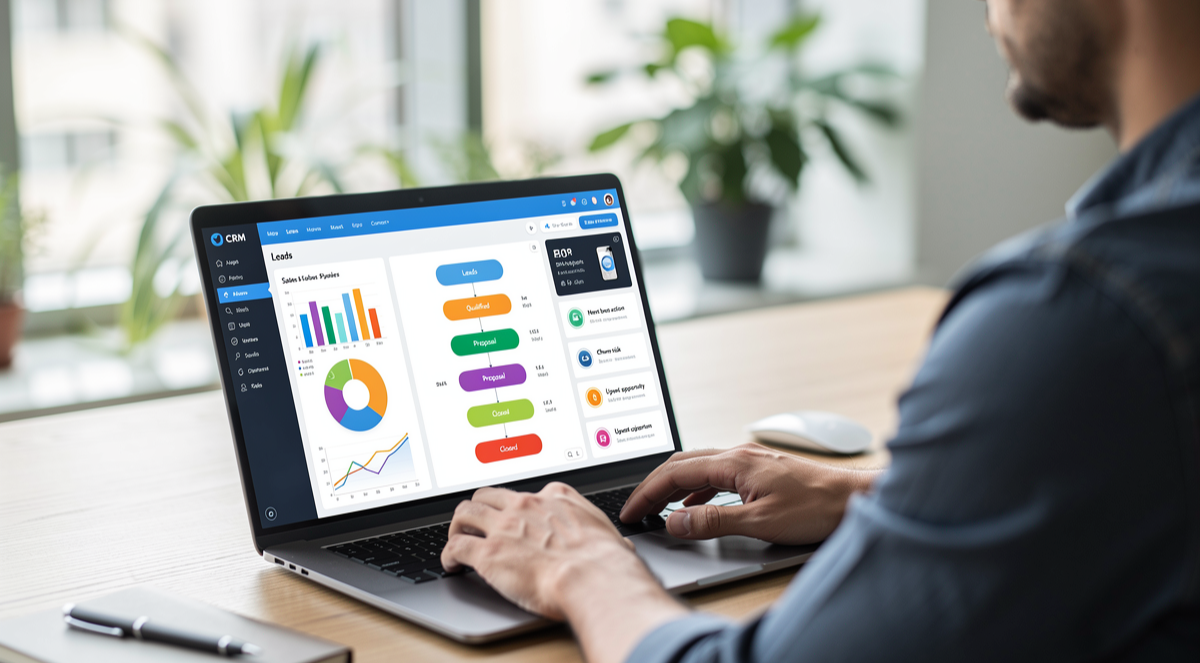
These platforms learn from your data, predict customer behavior, and suggest the best next actions. In our complete comparison of AI platforms for customer management, we break down how these tools stack up across industries. Here, we focus specifically on the options built for small business budgets and workflows.
Small businesses need CRM systems that deliver value without requiring dedicated IT staff or months of training. The best platforms in 2025 combine ease of use with intelligent automation that adapts to your specific sales process. They eliminate manual data entry, predict which leads deserve attention, and keep your pipeline organized without constant maintenance.
What makes a CRM truly suitable for small businesses
Size matters when choosing business software. Enterprise CRMs offer impressive capabilities but come with complexity that small teams cannot justify. The right small business CRM balances functionality with simplicity. You should be able to set it up in days rather than months. Your team should understand how to use it after a brief orientation rather than extensive training sessions.
Cost structures reflect this reality. Small business CRMs typically offer free tiers or starter plans under $20 monthly per user. They grow with you through clearly defined pricing tiers that add features as your needs expand. Hidden costs like implementation fees, mandatory consulting, or expensive integration add-ons should raise red flags.
AI features in small business CRMs focus on practical time savings rather than sophisticated analytics. Lead scoring identifies your hottest prospects automatically. Email automation sends follow-ups at optimal times based on engagement patterns. Contact enrichment pulls information from public sources to complete profiles without manual research. These capabilities make one person as productive as a small team.
HubSpot CRM: the free tier champion
HubSpot CRM has become the default choice for many small businesses because it offers genuine value at no cost. The free version includes unlimited users and contacts, deal tracking, email integration, and basic automation. This is not a limited trial but a permanent free tier that many businesses use for years.
The AI features at the free level remain modest but useful. Contact and company insights pull relevant information automatically. Email tracking shows when prospects open messages and click links. The mobile app keeps your pipeline accessible from anywhere. For a freelancer or small agency managing up to a few hundred contacts, the free tier handles everything necessary.
Upgrading to paid HubSpot tiers unlocks more sophisticated automation and reporting. The Starter plan at $15 monthly per user adds conversation intelligence and custom reporting. Professional and Enterprise tiers introduce predictive lead scoring, custom objects, and advanced workflow automation. The progression makes sense for growing businesses that need more capability over time.
Integration strength sets HubSpot apart from competitors. The platform connects natively with Gmail, Outlook, Slack, WordPress, and hundreds of other applications. If you already use HubSpot for marketing or customer service, the unified ecosystem creates powerful synergies. Data flows between tools without manual transfer or complex integration projects.
Pipedrive: visual pipeline management done right
Pipedrive takes a focused approach by building specifically for sales teams. The visual pipeline interface shows exactly where every deal stands and what action each one needs next. This clarity helps small teams stay organized without complicated workflows or endless customization.
The AI assistant in Pipedrive analyzes your historical data to identify patterns in successful deals. It notices that deals moving from stage A to stage B within three days close at higher rates. The system then alerts you when opportunities sit too long in a stage or when activities fall below your successful patterns. These insights guide daily prioritization without requiring analysis skills.
Sales reporting in Pipedrive provides the metrics small businesses actually use. Revenue forecasts, conversion rates by stage, and activity tracking all appear in straightforward dashboards. You understand pipeline health at a glance rather than building complex reports. The mobile app maintains this simplicity while keeping you connected on the go.
Pricing starts at $14 monthly per user for essential features and scales to $99 monthly for enterprise capabilities. Most small businesses find the advanced tier at $34 monthly provides the right balance of automation and reporting. Unlike some competitors, Pipedrive includes core AI features across all paid tiers rather than locking them behind premium plans.
Freshsales: communication built in
Freshsales by Freshworks differentiates itself by including phone and email capabilities directly in the CRM. Small businesses avoid paying separately for communication tools while keeping all customer interactions in one system. The AI analyzes conversations across channels to provide a complete view of each relationship.
Freddy AI, the intelligent assistant in Freshsales, scores leads based on engagement signals and demographic fit. It predicts deal closure probability and suggests optimal contact times. The system also detects duplicate contacts and merges them automatically, maintaining database cleanliness without manual effort. These features save hours weekly for small teams managing growing contact lists.
The workflow automation in Freshsales handles repetitive tasks like assigning leads, sending follow-up emails, and updating deal stages. You build automation visually without coding knowledge. The platform learns from your patterns and suggests additional automations over time. This progressive approach prevents overwhelming new users while growing capabilities as you become comfortable.
Pricing remains competitive with a free tier for up to three users and paid plans starting at $15 monthly per user. The Growth plan at $39 monthly unlocks advanced AI features and custom reporting. For small businesses wanting communication tools integrated with CRM rather than connected through APIs, Freshsales provides compelling value.
Zoho CRM: depth at a budget price
Zoho CRM offers perhaps the most comprehensive feature set at the lowest cost. The platform includes lead management, contact management, workflow automation, analytics, and AI assistance. Businesses willing to invest time in configuration gain capabilities that compete with enterprise systems.
Zia, the AI assistant in Zoho CRM, provides predictions, suggestions, and anomaly detection across your sales process. It predicts which deals will close and which need intervention. The sentiment analysis feature scans customer emails to identify satisfaction issues before they escalate. Zia can also answer questions about your pipeline in natural language, making data accessible without building reports.
The learning curve for Zoho CRM is steeper than alternatives. The extensive customization options that make it powerful also make it complex. Small businesses should plan for a week or two of setup time rather than expecting immediate productivity. However, this investment pays off through a system tailored precisely to your process.
Zoho pricing starts with a free tier for three users and paid plans from $14 monthly per user. The Professional plan at $23 monthly includes all core AI features. For small businesses with unique workflows that need customization, Zoho delivers enterprise functionality without enterprise costs.
Making your choice
Selecting the right CRM depends on your specific situation rather than a universal best option. HubSpot works well if you want fast setup and plan to use other HubSpot products. Pipedrive suits sales-focused teams wanting visual pipeline management. Freshsales appeals to businesses wanting integrated communication tools. Zoho fits those needing deep customization at budget prices.
Start with free tiers when available to test fit before committing budget. Most small businesses know within two weeks whether a CRM matches their workflow. Pay attention to how much manual work the system eliminates rather than counting features. A simpler CRM that your team actually uses beats a sophisticated one they avoid.
For insights on automating your workflow beyond CRM, explore our guide to AI automation tools for freelancers to see how these systems connect with broader productivity platforms.