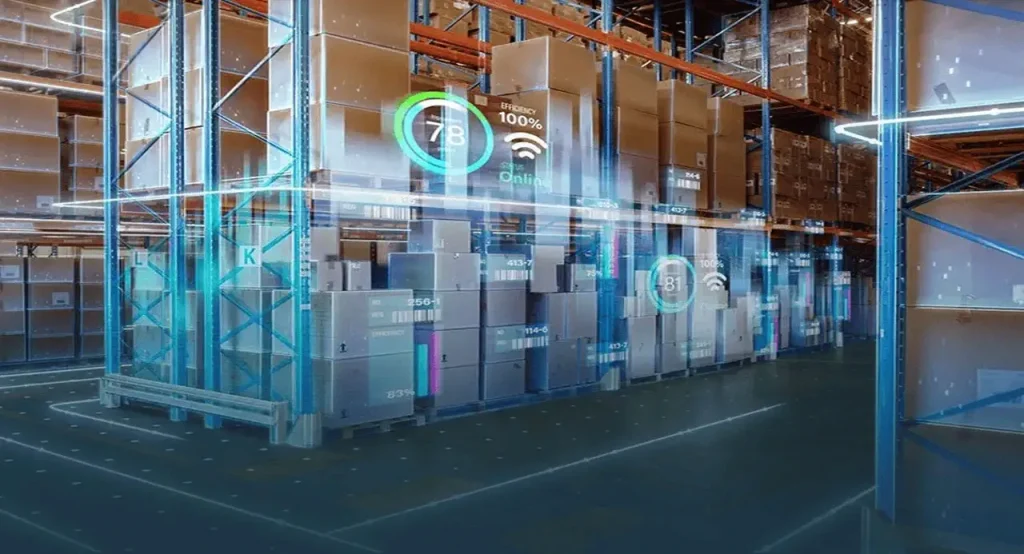
The modern e-commerce warehouse is no longer a static storage facility. It is a dynamic and responsive fulfillment center powered by intelligent software. These advanced systems analyze order flow and inventory placement in real-time. They direct workers on the most efficient picking paths and manage stock with incredible precision. This strategic integration of technology is revolutionizing operational efficiency. It slashes processing times and creates a seamless flow from order placement to dispatch. This evolution is a critical chapter in the story of building a truly intelligent e-commerce engine.
The Chaos of the Traditional Warehouse
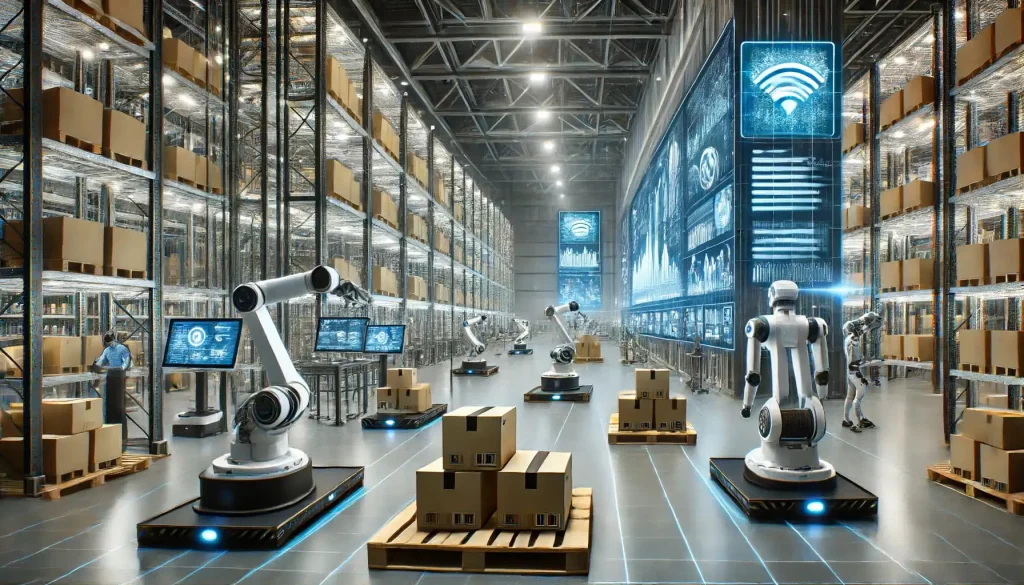
Walk into a warehouse running on legacy systems or manual processes. You will often see the same challenges. Workers spend most of their day walking. They crisscross the warehouse floor chasing single items on a paper pick list. Popular products are stored in inconvenient locations simply because that’s where they fit during the last restock. Batch picking leads to congestion and errors as employees juggle multiple orders at once.
The result is what we call the three deadly wastes: wasted time, wasted labor, and wasted space. Your team is physically working hard but not necessarily working smart. Order fulfillment times are longer than they should be. The risk of mis-picks and shipping the wrong item increases with fatigue and disorganization. This chaos directly impacts your bottom line and your customer’s experience. A slow shipment or a wrong item is a quick way to lose a customer for good.
The Intelligent Core: The Warehouse Management System (WMS)
The brain of a modern automated warehouse is its AI-driven Warehouse Management System or WMS. This is not just a digital ledger tracking what’s in stock. It is the central command center that makes real-time decisions. It has a digital twin of your entire warehouse layout and inventory. It knows the exact location of every single item down to the bin level.
This system uses complex algorithms to constantly optimize the warehouse environment. It decides the most efficient storage location for every new product that arrives. It understands which items are frequently sold together and suggests storing them close to each other. It monitors inventory levels and can flag items for cycle counts before a discrepancy becomes a problem. This intelligent core turns chaotic storage into a logical and optimized ecosystem.
The Art and Science of Smart Picking
One of the biggest time sinks in fulfillment is the picking process. This is where AI delivers immediate and measurable returns. Instead of a static pick list, workers are guided by smart devices like handheld scanners or wearables.
The system uses a method called dynamic slotting. It continuously analyzes sales data to identify fast-moving items. It then ensures these high-demand products are placed in the most accessible zones like the ‘golden zone’ between the waist and shoulders. This minimizes reaching and bending, speeding up the process and reducing physical strain on your team.
Furthermore, the AI generates optimized pick paths. For a batch of orders, it doesn’t just list the items. It calculates the single most efficient route through the warehouse to collect all of them in the shortest possible time. It’s like having a GPS for your warehouse floor that avoids congestion and dead ends. This alone can reduce walking time by up to 60%, dramatically increasing the number of orders each picker can complete per hour.
Beyond Human Limits: Robotics and Automation
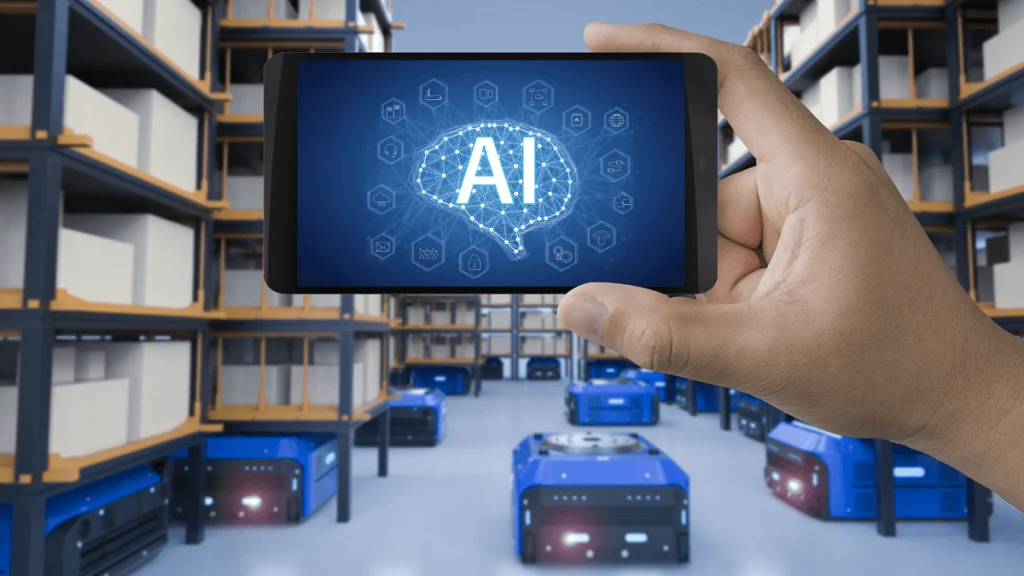
For businesses operating at a larger scale, AI extends into the physical world through robotics and automation. This is not about replacing human workers but about augmenting their capabilities and handling repetitive, physically demanding tasks.
Autonomous Mobile Robots or AMRs are a prime example. These robots can be directed by the WIS to autonomously navigate the warehouse. In a goods-to-person system, the robots bring the entire storage shelf to the picker. The employee stays in one station, reduces walking to zero, and simply picks the required items. This drastically boosts productivity and accuracy.
Other forms of automation include automated sortation systems that route packages to the correct shipping lane and automated guided vehicles that move pallets. The AI coordinates all these elements, ensuring they work in harmony. This creates a synchronized flow that feels more like a well-conducted orchestra than a hectic warehouse.
Building a Fulfillment Center That Grows With You
Implementing these AI and SaaS tools is not just about solving today’s problems. It is about building a foundation for scalable growth. A manually run warehouse hits a hard ceiling. You can only add so many people and so much space before efficiency plummets and errors skyrocket.
An AI-optimized warehouse scales gracefully. The system can handle a doubling of your SKU count or a seasonal surge in orders without breaking a sweat. It provides the data and control you need to make smart decisions about warehouse expansion, labor planning, and capital investment.
The efficiency gains within your four walls have a direct ripple effect on the next stage of the customer journey. Once an order is picked and packed with maximum speed and accuracy, the focus shifts to getting it to your customer’s door. The logical next step is to explore how AI can streamline the complex world of shipping and carrier selection, ensuring the external journey is as optimized as the internal one.

AI Technologies in the Warehouse
There are many AI-based technologies making an impact on warehouse operations. Here are a few technologies that are already helping enable automation, drive efficiencies, and support better decision-making.
Picking robots and autonomous mobile robots :
Autonomous mobile robots (AMRs) are designed to move items around a warehouse in less time, with greater ease, and with higher accuracy compared to warehouse employees, by using AI to recommend the best path rather than a preprogrammed route. These robots can also handle tasks that could be difficult or unsafe for warehouse staff, such as retrieving items from high shelves.
Predictive maintenance :
Predictive maintenance uses AI to help identify machinery issues before they become major problems. Alerting employees to take action before a breakdown occurs can help improve equipment reliability, minimize downtime, and reduce repair costs. Sensors are often used to monitor robots and equipment in real time, collecting and streaming data into a WMS where it can be analyzed against historical data to spot irregularities. The AI’s job is to help determine if a data point counts as an irregularity and whether it signals a potential issue or looming malfunction.
Smart warehousing :
Smart warehousing is a concept that encompasses many of the AI-powered capabilities deployed in a warehouse management system. This includes using AI to optimize warehouse layouts and item placement or identify seasonal demand fluctuations for informed inventory planning. Smart warehousing also covers the use of Internet of Things technologies such as RFID tags and equipment sensors to help streamline item scanning and tagging, among other processes, and to monitor equipment and robot performance to enable predictive maintenance.
Computer vision :
Computer vision is a type of AI that helps autonomous mobile robots to navigate warehouses, avoid obstacles, and transport inventory without human intervention. It can also recognize and classify packages or materials, helping to streamline sorting processes and verify that items are sent to the right place for further order processing. Cameras and image recognition systems can scan barcodes or QR codes on products in real time, allowing for automated inventory updates and can help reduce risk of human error.
Natural language processing :
Natural language processing (NLP) is a type of AI that can be used in a WMS to summarize documents and automate communication and data entry tasks. NLP-powered digital assistants can use shipment data from a warehouse system to help perform some customer service functions, providing real-time order updates and responses to customer queries. NLP can also automate data extraction from shipping notices, invoices, delivery receipts, and other documents to help reduce manual errors and speed up processing times.
Intelligent forecasting and predictive analytics :
The combination of AI, data analytics, and cloud applications enables intelligent demand forecasting and inventory planning in warehousing operations. With help from AI-supported forecasting and predictive analytics, businesses can manage the raw materials and finished goods in their warehouses in line with demand trends and seasonality. Predictive analytics can also help calculate how long it will take to pick, pack, and ship an order, thus providing more accurate time estimates for order completion. These predictions can also help flag orders at risk of being delayed or missing expected service levels and shipping windows, leading to better order fulfillment.
Frequently asked questions
What is AI warehouse automation?
AI warehouse automation applies machine learning to storage and fulfilment operations: slotting products where picking is fastest, forecasting labour needs, routing pickers efficiently, catching inventory errors and orchestrating robots where present. The software layer matters more than robotics; most gains come from smarter decisions, not machines.
What are the main benefits of warehouse automation?
Operators typically see 20 to 40 percent faster order processing, significant reductions in picking errors and mis-shipments, better space utilisation, and labour planning that matches actual demand. The compound effect is fewer delayed or wrong orders, which shows up directly in customer satisfaction.
Can small ecommerce businesses afford warehouse automation?
Yes, because the entry point is software rather than robots. Inventory and warehouse management systems with AI features start at 100 to 500 dollars monthly, and third-party logistics providers give small brands access to automated fulfilment without capital investment. Robotics only enters the equation at significant scale.
Where should a business start with warehouse automation?
Start with inventory accuracy: a system providing real-time stock visibility across channels eliminates the errors causing most fulfilment problems. Slotting optimisation and demand-driven labour planning follow. Physical automation comes last, and only when order volume proves the investment.
🔗 Related Articles — EcomStack
- Automate Logistics Support with AI Order Tracking
- AI for Ecommerce Freelancers: How to Build a High-Value Service Business in 2026
- Solving Last-Mile Delivery with AI Route Optimization (Complete 2026 Guide)
- AI Demand Forecasting: Eliminate Stockouts and Overstock in 2026 (Complete Guide)
- Master Reverse Logistics and Reduce Return Rates with AI (2026 Deep Dive)