Designing an AI business model for freelancers is about more than launching a single offer or service. The real shift happens when you intentionally combine consulting, automation, digital products and recurring packages into one coherent system. Structured this way, your activity aligns naturally with the new economic models powered by AI for freelancers, where assets, systems and positioning work together to generate sustainable growth.
The Limitations of Single-Model Freelancing
Most freelancers operate with one primary revenue model. They sell consulting hours, or they deliver project-based work, or they run a small product business. This single-model approach creates vulnerability.
When consulting demand drops, revenue drops immediately. When product launches underperform, there’s no backup income. When projects dry up due to market conditions, cash flow becomes a crisis. Single points of failure create constant stress and limit growth potential.
The ecosystem approach distributes risk across multiple revenue streams. Consulting provides immediate cash flow. Products generate passive income. Retainers create stability. Automation services offer recurring revenue. When one stream slows, others continue flowing.
Beyond risk management, multiple models create synergy. Consulting clients become product customers. Product buyers hire you for implementation. Automation projects convert to retainer relationships. Each model feeds the others while compounding your total earning potential.
Choosing Your Core Revenue Pillars
You don’t need to implement every possible business model. Most successful freelancers build their ecosystem around two to four core pillars aligned with their strengths and market position.
Start with your natural strengths and existing expertise. If you’re already doing great consulting work, that becomes pillar one. If you have templates and processes clients constantly ask about, digital products become pillar two. Build from what’s already working rather than forcing models that don’t fit.
Consider which models complement each other naturally. Consulting and retainers fit together seamlessly. Digital products and content marketing support each other perfectly. Automation services and white label solutions share similar clients and sales processes.
Balance immediate revenue with long-term assets. Pure consulting generates cash now but builds no equity. Pure products take time to generate revenue but create lasting assets. Combining both gives you current income while building future value.
Most successful ecosystems follow one of three patterns. Service-plus-products combines client work with digital offerings. Platform-plus-support pairs white label solutions with consulting. Content-plus-products builds audience through free content monetized via products and services.
Building Your Ecosystem Sequentially
Trying to launch everything simultaneously leads to mediocre execution across the board. Build your ecosystem one model at a time, ensuring each works before adding the next.
Start with the model closest to your current revenue. If you’re already freelancing, optimize that first. Raise your rates, improve your positioning, streamline your delivery. Get your core offer working efficiently before expanding.
Add your second model once the first generates consistent income. This might take three to six months. The goal is having enough stability that you can invest time in building something new without financial pressure forcing you back to pure client work.
Your second model should leverage assets from your first. If consulting is your foundation, create products teaching what you do for clients. If products come first, add consulting helping buyers implement. Each new model should require less starting effort because you’re building on existing assets.
Add additional models only after the first two operate smoothly. This might take twelve to eighteen months from when you started. By then you have real data showing what works, established processes and enough revenue to invest in expansion.
Creating Systems That Run Without Constant Attention
The power of an ecosystem comes from models that don’t require your constant presence. Systems and automation let revenue flow while you focus on high-value activities.
Productize your service offerings into repeatable packages. Standardized processes, templates and workflows mean each project requires less custom work. What takes 40 hours the first time might take 15 hours by the tenth iteration with good systems.
Automate administrative and operational tasks. Client onboarding, invoicing, reporting and scheduling should run on autopilot. Tools like Zapier, Calendly and automated email sequences handle repetitive work so you can focus on delivery and strategy.
Build content libraries and knowledge bases that answer common questions. Recorded training videos, written guides and FAQ resources reduce support time while improving client success. Create once and leverage repeatedly.
Hire contractors or team members for defined tasks once revenue supports it. Don’t try hiring full-time staff immediately. Start with project-based help for specific deliverables. A designer for product creation, a writer for content, a VA for admin work. Add capacity incrementally as needs and revenue justify.
Positioning Your Ecosystem Business
How you position yourself in the market determines which opportunities come your way and what rates clients will pay. Ecosystem businesses require different positioning than single-service freelancers.
Position as a specialist solving specific problems for specific people. Don’t be an AI freelancer helping everyone. Be the person who helps e-commerce brands automate operations, or SaaS companies optimize onboarding, or consultants scale their practice. Specificity attracts ideal clients while repelling poor fits.
Lead with your signature method or framework. Give your approach a name and structure. The five-step automation blueprint, the revenue optimization system, the growth implementation framework. Proprietary IP differentiates you from generic service providers.
Show the complete ecosystem in your positioning even if prospects initially engage for one piece. They should understand you offer strategy, implementation, products and ongoing support. This positions you as a complete solution rather than just another vendor.
Use case studies that demonstrate multiple services working together. Show how you implemented automation for a client, then supported them with a retainer, then sold them your advanced training product. This illustrates the ecosystem value while showing natural progression paths.
Pricing the Full Ecosystem Value
Ecosystem pricing differs from single-service pricing. You’re not just selling one thing. You’re selling a complete solution with multiple components and long-term relationship potential.
Create entry points at various price levels. Low-ticket products at $50 to $200 let people discover your work. Mid-tier consulting projects at $5,000 to $15,000 deliver transformation. Premium retainers at $3,000 to $10,000 monthly provide ongoing partnership. Multiple entry points maximize the audience who can engage.
Bundle services and products strategically. Rather than selling consulting and products separately, create packages combining both. A $12,000 implementation that includes your course and templates delivers more total value while justifying premium pricing.
Offer upgrade paths from lower to higher value engagements. Product buyers get special pricing on consulting. Consulting clients get free access to all products. Retainer clients get priority access to new offerings. This increases lifetime value while rewarding loyalty.
Price based on total customer lifetime value, not individual transactions. A client starting with a $5,000 project who then buys $200 in products and signs a $4,000 monthly retainer represents $53,000 in year-one revenue. Understanding these numbers lets you invest more in acquisition and deliver exceptional service knowing the long-term return.
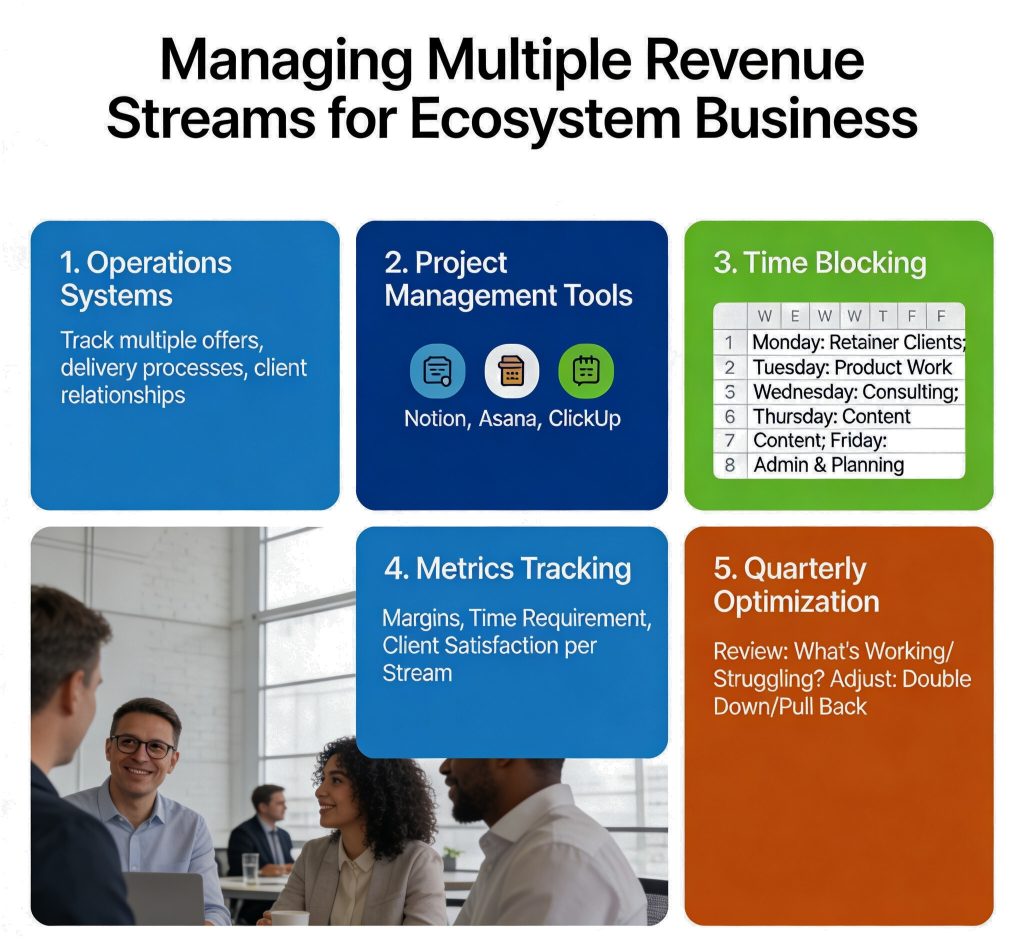
Managing Multiple Revenue Streams