Inventory distortions – both stockouts and overstocks combined – cost retailers nearly $1.1 trillion globally each year. These alarming figures translate into substantial lost sales, dissatisfied customers, wasted valuable resources, and reduced profit margins.
While stockouts drive customers to competitors, overstocks tie up significant capital and increase storage costs. Traditional inventory management methods, often based on historical data and manual tracking, struggle to keep pace with real-time market fluctuations. This is where Artificial Intelligence (AI) proves to be an invaluable asset.
From accurate demand forecasting to automating replenishments and adjusting prices based on real-time data, AI helps businesses address one of the oldest challenges in retail: maintaining the optimal inventory level at the right time. In this article, we will explore how AI in the retail sector helps prevent stockouts and overstocks by improving forecast accuracy, streamlining operations, and enabling more informed decision-making.
AI demand forecasting: eliminate stockouts and overstock
Manual inventory management is a reactive game of guesswork that costs e-commerce businesses sales and profit. By leveraging advanced AI and SaaS tools you can transition to a predictive model. This technology analyzes countless data points from seasonality to marketing campaigns to forecast demand with stunning accuracy. This allows for automated optimal stock levels a core principle we explore in our master guide on building an AI-powered e-commerce engine.
The high cost of guessing
Let’s paint a familiar picture. You have a product that suddenly goes viral or gets featured by an influencer. Your sales team is thrilled but your operations team is in a panic. You sell out in 48 hours. The item is now on backorder for three weeks. During that time you lose countless sales and frustrate potential customers who go to a competitor. This is a stockout.
Now flip the script. You order a huge quantity of a new product based on a gut feeling. It doesn’t sell as expected. Six months later your warehouse is packed with slow-moving inventory. You have capital tied up that could have been used for marketing or new product development. You are forced to run deep discounts just to clear the space. This is overstock.
Both scenarios are symptoms of the same disease: a lack of visibility into future demand. Traditional forecasting methods like looking at last year’s sales are no longer enough. The market moves too fast. Consumer behavior is too complex. This is where modern demand forecasting steps in to replace intuition with data.

How ai sees what you can't
So how does this technology actually work? At its core AI demand forecasting uses machine learning models. Think of these models as incredibly smart and tireless apprentices. They constantly analyze your historical sales data. But they go much further than that. They learn from a vast array of internal and external signals to build a nuanced prediction of future sales.
These signals include:
- Your Sales History: The basic foundation but viewed through a lens of trends and patterns not just raw numbers.
- Marketing Activities: They correlate demand spikes with your email campaigns social media pushes and paid advertising spend.
- Seasonal Trends: They understand and predict the annual cycles for your specific product categories.
- Website Traffic: They analyze traffic volume and behavior even if a visit doesn’t result in an immediate sale.
- Broader Market Data: This can include everything from local weather forecasts to economic indicators and even competitor pricing data.
The system crunches all this information simultaneously. It identifies correlations that a human analyst would likely miss. It learns that a certain combination of a marketing email plus a cool weather front in the northeast leads to a 35% increase in sales for a specific product. This level of insight is what transforms inventory from a liability into a strategic asset.
Moving from reactive to proactive inventory management
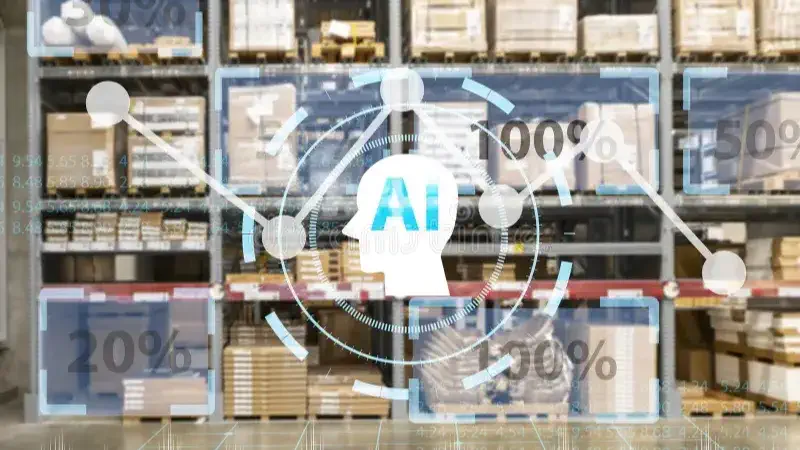
With a reliable AI demand forecast in place your entire approach to inventory changes. You stop reacting to problems and start proactively managing your supply chain. This shift manifests in several key areas.
First is purchase order automation. Instead of your team manually calculating how much to order you can set rules for the system. When stock for a particular item is predicted to drop below a safety threshold in four weeks the system can automatically generate a purchase order for the recommended quantity. This frees up your team to focus on strategic tasks like vendor relationship management.
Second is safety stock optimization. Holding too much safety stock wastes money. Holding too little risks stockouts. An AI model doesn’t guess. It dynamically calculates the ideal safety stock level for every single product based on its unique demand volatility and supply chain reliability. This ensures you are protected against uncertainty without bloating your inventory costs.
Finally you gain incredible clarity for warehouse planning. If your forecast predicts a massive surge for a product line next month you can plan your warehouse labor and layout accordingly. You can ensure that high-demand items are easily accessible. You can schedule temporary staff in advance. This smooths out operational bumps and creates a more efficient workflow.
A real-world scenario: the power of predictive insight
Imagine you sell specialty coffee beans. Your traditional method was to order based on last month’s sales. This often led to problems.
Now you use an AI forecasting tool. The system analyzes the data and sends you an alert. It predicts a 60% increase in demand for your Ethiopian roast over the next eight weeks. Why? It has correlated several factors. It sees that a major food blogger is planning a feature on Ethiopian coffee. It notes a growing search trend for that specific origin in your key markets. It even factors in a forecasted delay from your shipping provider.
With this knowledge you can confidently place a larger order with your supplier now. You can arrange for the extra warehouse space. Your marketing team can create a targeted campaign to capitalize on the coming trend. Instead of being caught off guard you are perfectly positioned to meet demand and maximize revenue. This is the power of moving from hindsight to foresight.
Building a resilient and profitable future
Implementing AI-driven demand forecasting is more than a tactical upgrade. It is a strategic move that builds resilience and profitability into the core of your business. You reduce the capital tied up in excess inventory. You eliminate the lost revenue and brand damage from stockouts. You empower your team with data-driven confidence.
The journey towards a fully optimized supply chain involves more than just smart forecasting. Once your inventory is under control the next logical step is to ensure it moves through your warehouse with maximum efficiency. Exploring how AI can automate and optimize your fulfillment center operations is the natural progression for any serious e-commerce leader. This seamless integration of systems is what creates a truly dominant logistics machine.
How AI is Revolutionizing Inventory Management in Retail: Key Functions
AI plays an increasingly central role in modern inventory management for retail businesses. Its ability to improve forecast accuracy, enable real-time tracking, and automate stock-related decisions makes it an essential solution. Let’s break down the key functions:
1. Predictive analysis : accurately anticipating demand
AI leverages the power of machine learning to analyze vast amounts of data. It takes into account sales history, seasonal trends, customer behavior, and influential external factors such as holidays or weather conditions.
By identifying and analyzing these complex patterns, AI can forecast future demand with significantly greater accuracy than traditional methods. This allows retailers to optimize their supply, ordering the right quantity of products at the right time, thereby reducing the risk of stockouts and unnecessary surpluses.
2. Real-time stock tracking : complete visibility of inventory
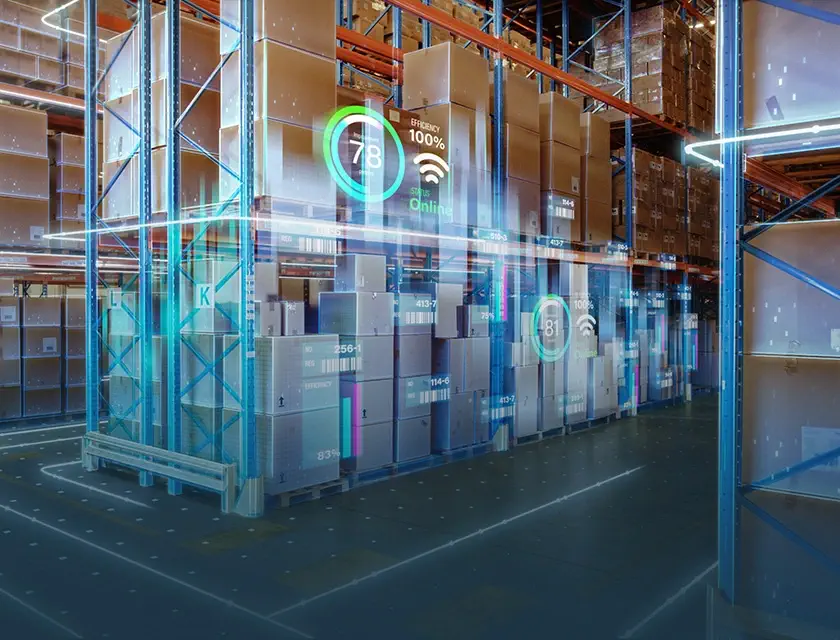
AI systems, often integrated with sensors or IoT (Internet of Things) devices, enable real-time tracking of stock levels in warehouses, stores, and distribution centers. This feature provides an updated view of product availability and their exact location.
With this real-time information, retailers can proactively restock shelves even before stockouts occur. They can also transfer products between different sales points based on local demand. Additionally, real-time tracking facilitates the rapid detection of any anomalies or discrepancies, thereby improving the overall accuracy of inventory management.
Frequently asked questions
What is AI demand forecasting?
AI demand forecasting is the use of machine learning to predict future product demand from historical sales, seasonality, market trends and external signals. Unlike manual spreadsheet forecasts, AI models update continuously and detect patterns humans miss, which is how retailers reduce both stockouts and overstock at the same time.
How accurate is AI demand forecasting?
Modern AI forecasting typically reduces forecast error by 20 to 50 percent compared with traditional statistical methods. Accuracy depends on data quality and history length: stores with two or more years of clean sales data see the strongest results, while new products rely on similar-item modelling.
What data does AI demand forecasting need?
The core inputs are historical sales by SKU, inventory levels, pricing and promotion history, and seasonality. Advanced setups add external data such as weather, holidays and market trends. Most platforms connect directly to Shopify, Amazon or an ERP, so no manual data preparation is required.
How much do AI demand forecasting tools cost?
Entry-level tools for small ecommerce stores start around 50 to 200 dollars per month. Mid-market platforms run 500 to 2,000 dollars monthly, and enterprise suites are custom priced. Most vendors offer free trials, and the savings from avoided stockouts usually cover the subscription within the first quarter.
🔗 Related Articles — EcomStack
- Solving Last-Mile Delivery with AI Route Optimization (Complete 2026 Guide)
- Master Reverse Logistics and Reduce Return Rates with AI (2026 Deep Dive)
- The AI-powered e-commerce engine: A strategic guide to transforming logistics and operations
- AI for Ecommerce Freelancers: How to Build a High-Value Service Business in 2026
- AI for Warehouse Automation and Smarter Fulfillment: The 2026 Complete Guide