Freelancing has become more than a way to earn a living—it’s a lifestyle built on autonomy, curiosity, and adaptability. Yet freedom comes with a hidden weight: the endless list of repetitive tasks that distract from meaningful work. Between searching for clients, managing deadlines, and juggling admin, growth often feels trapped behind a full inbox and late nights.
The shift toward automation has changed that pattern. With well-crafted workflows, freelancers can let technology handle the repetitive parts of business while keeping their focus on craft and connection. These systems don’t replace human creativity; they protect it. From lead generation to content creation, from managing operations to nurturing client loyalty, advanced automation turns independence into scalability.
This guide brings together ten practical workflows designed to help freelancers, e-commerce owners, and marketers grow sustainably. Each section explores a key area where automation creates tangible progress, supported by strategies drawn from real-world use. For deeper examples, related resources like AI tools for freelancers expand each concept into focused applications.
Section 1. Understanding AI Automation: The Freelance Revolution
Freelancing once meant doing everything manually: replying to every message, writing proposals by hand, and tracking finances in messy spreadsheets. That approach limits creativity and makes scaling nearly impossible. Automation changes that by adding structure to your independence. Instead of reacting to every task, you design a workflow that anticipates it.
Automation means teaching systems to handle recurring actions based on conditions you control. For freelancers, that can range from scheduling meetings automatically to summarizing client feedback after projects. The purpose isn’
t speed for its own sake—it’s efficiency that keeps focus intact.
Think of your freelance business as an ecosystem. Every client request, invoice, article, or design file travels through the same cycle. Without structure, these cycles overlap into chaos. With intelligent automation, each one flows smoothly: inquiries become tasks, tasks become invoices, invoices become data. You start to see patterns—who your best clients are, which projects drain time, and when your workload peaks.
Implementing this kind of system doesn’t require deep technical skill. It starts with mindset. The freelancers who grow fastest treat their business processes like assets, not chores. They understand that automating small, repetitive responsibilities builds momentum for the work that matters most—the work only a human can do.
In many ways, automation is the quiet revolution reshaping freelancing. It’s no longer just a collection of digital tools; it’s a new way to manage time and attention. For professionals ready to scale, exploring practical applications through AI tools for freelancers offers a strong first step toward designing a smarter, lighter workday.
Section 2. Workflow : Automating Lead Generation and Client Outreach
Securing new clients is one of the hardest and most time-consuming tasks for any independent professional. Too often, it means sending dozens of messages, following up repeatedly, and hoping for replies that never come. Automation simplifies this entire process. It brings order to prospecting, allowing freelancers to focus on people instead of mechanics.
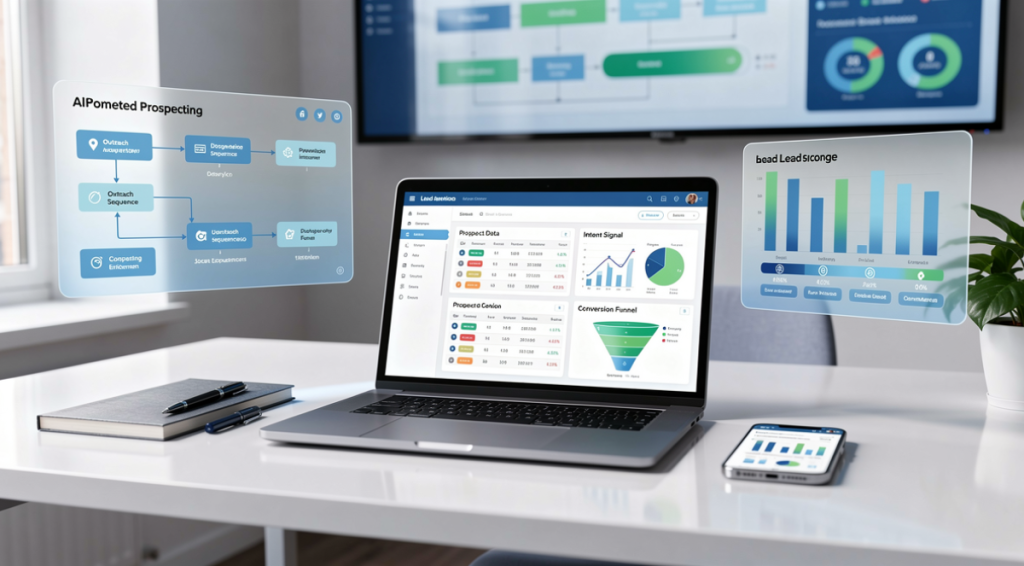
The foundation of efficient lead generation is data. Platforms can now gather information about potential clients—industry, company size, recent activity—and present it in clean, actionable dashboards. Instead of browsing social media for hours, you get refined lists of qualified prospects ready for outreach. Combined with scheduling systems, you can plan entire campaigns in advance, freeing your daily workflow for creative focus.
Automation also improves personalisation. Smart tools capture patterns in your communication history and adjust tone, frequency, or timing. Messages no longer sound generic but tailored. This helps maintain authenticity—a quiet but powerful factor in building trust. A personalized outreach sent at the right moment often wins more respect than ten rushed emails.
Follow-ups are another pain point many freelancers neglect. Automating them ensures you never lose momentum after initial contact. Lead management systems log interactions and schedule reminders for the next step. If a prospect doesn’t respond within a few days, a polite, pre-timed follow-up goes out automatically. Consistency becomes your sile
nt advantage.
The result is simple but profound: a steady stream of conversations with clients who actually match your services. You spend less time chasing cold leads and more time closing warm ones. Each workflow layer—from research to outreach to response tracking—works together as a quiet support network for your business growth.
For a full breakdown of how to integrate these systems into your client acquisition process, explore AI lead generation tools to grow your client base. It shows how well-structured workflows can replace uncertainty with a predictable rhythm of new opportunities.
Section 3. Workflow : Scaling Content Creation with AI
Freelancers often live by their ideas. Whether you write, design, code, or strategize, content creation lies at the center of your value. The challenge is maintaining quality and consistency when time feels short. Automation brings balance—helping professionals create more without emptying their creative energy.
The first step to scaling content is simplifying research. Platforms that scan trends, analyze search intent, and summarize audience interests give you a strong head start. Instead of sinking time into endless keyword searches, you identify what matters and move straight to creation. Tools that recommend formats or structure also keep your work coherent and targeted.
Next comes organization. Building outlines or frameworks with automated assistance helps maintain l
ogical flow while freeing space for storytelling. You stop fighting the blank page. The process becomes smoother, more deliberate. It allows you to work faster without losing that personal tone or narrative depth.
Editing and optimization complete the circle. Programs that analyse text clarity, tone, or readability help refine voice while maintaining consistency across projects. They flag pacing issues, highlight overused words, and make small adjustments that lift overall quality. You keep full creative control—only now, you have a partner gently reminding you where to polish.
Automation also turns one piece of content into many. A blog can evolve into a series of social posts, newsletter teasers, or slide decks through repurposing systems. Freelancers who master this transformation amplify visibility with less workload. Each new format becomes another bridge connecting you to your audience.
These content workflows don’t diminish creativity; they support it. The more structure you build into production, the more energy remains for vision and originality. The process feels lighter yet produces stronger outcomes—an essential advantage for solo professionals competing in crowded markets.
To explore this balance between creative freedom and structured efficiency, review AI content creation: scale your output like a pro, where each stage of automated content building is unpacked with practical examples.
Section 4. Workflow : Automating Business Operations and Reporting
Behind every successful freelance brand lies a web of unseen processes—emails, schedules, invoices, reports. These are the silent routines that keep everything running yet quietly drain the day’s energy. When they pile up, creativity suffers. Automation restores that balance by taking charge of repetition.
It begins with administrative control. Scheduling tools align calendars, send automatic reminders, and prevent double bookings. They connect across time zones and even adapt when meetings change, keeping both sides informed wit
hout manual effort. Once in place, missed appointments or forgotten calls largely disappear.
Financial management deserves the same attention. Automating invoices, payment reminders, and expense tracking removes the anxiety of chasing money. Every transaction gets documented, and monthly summaries appear automatically. This transparency gives freelancers a clear picture of cash flow—stable ground for smarter decisions. When you wake up knowing your finances are already organized, stress loses most of its weight.
Reporting and analytics reveal how well your time converts into value. Automated dashboards collect data from invoices, time trackers, and task managers to show patterns: which clients bring steady income, which projects take too long, what weeks deliver peak productivity. Instead of guessing, you guide your business through evidence.
Connecting all these systems forms an invisible assistant that never sleeps. It ensures that routine work, while essential, doesn’t flood your attention. Whether you’re traveling or deep in creative focus, the business continues to operate predictably. Over time, consistency replaces chaos—a small transformation that builds long-term freedom.
Freelancers who invest in such systems often describe a quiet shift: more focus on strategy, less on firefighting. To see how financial and task automation translate into operational stability, read AI business automation: simplify your daily operations and learn how to design processes that protect both time and peace of mind.
Section 5. Workflow : AI for Customer Retention and Upselling
Finding new clients takes work, but keeping them builds true growth. Many freelancers focus on attraction and forget the long-term value that existing relationships hold. Client retention shapes stability; upselling shapes momentum. Automation strengthens both by making communication consistent and meaningful without consuming extra hours.
At the heart of retention lies awareness. Systems that track client activity—such as project frequency, responses, or seasonal demand—help you see when to reconnect. They remind you when a client might be ready for a follow-up service or feedback session. Instead of sending random messages, you engage at moments that feel natural and helpful.
Personalized communication turns one-time buyers into repeat collaborators. Tools can generate subtle reminders, thank-yous, or updates that sound human because they reflect past interactions. Clients appreciate this care,
especially when it stays relevant. It’s not about automation pretending to be empathy; it’s about technology supporting attentiveness at scale.
Upselling becomes smoother when insights guide your timing. Suppose you notice a pattern—your design clients often need social media visuals soon after a website launch. Automated monitoring reveals this trend, and you reach out proactively with the right offer. The balance between data and intuition creates natural opportunities to expand collaboration without pressure.
Feedback loops also strengthen loyalty. Gathering reviews and comments automatically after project delivery shows professionalism. When clients see their opinions lead to improvements, they feel part of your progress. This simple act builds trust, which later translates into referrals—perhaps the most organic form of marketing a freelancer can have.
Consistency across communication channels ensures you’re never forgotten. Even a simple sequence of targeted updates can keep your name fresh in a client’s mind months after completion. Over time, that reliability becomes reputation.
For a breakdown of how relationship-focused workflows sustain long-term partnerships, study AI customer retention: keep clients coming back, where automation meets the subtle art of lasti
ng connection.
Section 6. Building Your AI-Powered Freelance Ecosystem
By connecting all workflows—lead generation, creation, operations, and retention—you create more than productivity. You build an ecosystem where every system supports the other. Each client message triggers a chain that leads naturally from contact to completion, then to feedback and future collaboration. The freelancing experience shifts from reactive to rhythmic.
The key to a solid ecosystem is integration. Tools should communicate seamlessly rather than exist as isolated gadgets. When your outreach platform feeds new contacts directly into a project tracker, and that tracker syncs with your invoicing app, you start operating like a small agency instead of a one-person sprint. Automation links structure to creativity.
Mapping your workflows visually helps maintain clarity. Picture the journey of a project—from first inquiry to final payment—and identify where automation steps in. The more you reduce manual transitions, the more space you leave for deep work. Over time, these combined systems remove friction and form a natural workflow that adapts as your business evolves.
Scalability becomes the quiet advantage. You can handle more clients without feeling overwhelmed, collaborate seamlessly with others, and maintain consistent quality. When operations run smoothly, opportunities feel less risky—you can take on bigger projects knowing your process won’t break under pressure.
What makes this ecosystem unique is its flexibility. Freelancers can start small, automating one task at a time, until every part fits together harmoniously. Once connected, you have a digital structure that stays stable while the creative side stays agile. It’s long-term independence supported by smart design.
To learn how to connect each stage of your system into one cohesive environment, explore AI workflow automation: build a seamless freelance system. It outlines how to transform scattered efforts into a calm, self-sustaining machine that amplifies growth while protecting your time.
Conclusion
The modern freelancer’s strength lies in adaptability. Automation enhances that strength by freeing time, reducing friction, and creating space for creativity. Whether you write, design, consult, or manage e-commerce, the principle remains the same: build systems that handle repetition so your attention can focus on value. Each workflow described forms part of a larger discipline—a reflective, efficient way to grow without losing balance.
Once automation flows through your daily work, opportunities no longer slip through cracks. Leads arrive while you rest, content develops consistently, and loyal clients return naturally. Your business stops feeling like a race and starts running like a rhythm. That rhythm, quiet but steady, defines sustainable success.
If you’re ready to experience how these workflows come together in daily practice, start with AI tools for freelancers: boost your solo business. It’s the foundation on which every automated growth system is built—a place where independence and structure finally meet.