Updated September 2026.
Finding qualified leads consistently remains one of the biggest challenges for growing businesses. Traditional prospecting methods require massive time investment with unpredictable results. AI-powered lead generation tools now identify ideal prospects, personalize outreach at scale, and qualify leads automatically before they reach your sales team. 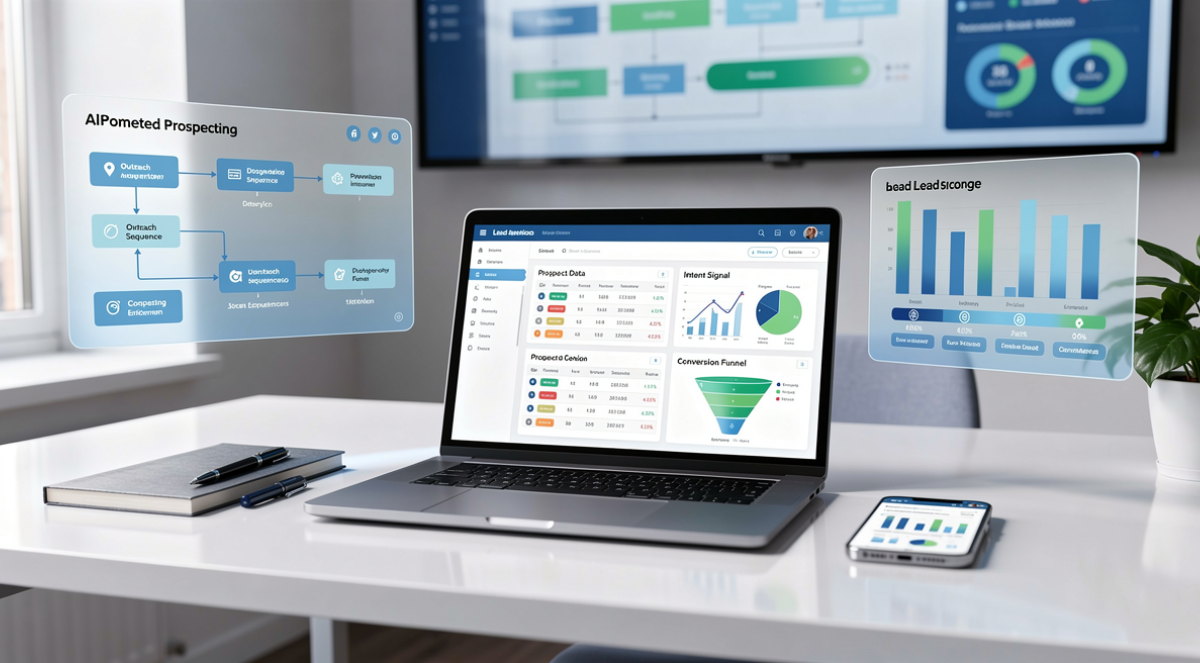
Lead generation creates the conversations; selling closes them. For the full framework on turning AI-savvy outreach into paid engagements, see our 2026 playbook on how to sell AI services to clients.
Cold email remains one of the fastest ways to book client calls — get the templates and sequence in our guide to cold email for freelancers.
LinkedIn is one of the highest-ROI channels for freelance outreach — see our 20 tactics in the guide to LinkedIn growth hacking for freelancers.
These systems work continuously in the background, filling your pipeline with high-quality opportunities. The strategies covered here fit within our comprehensive framework for growth hacking with AI to acquire more customers. We focus specifically on tools and tactics that generate measurable lead volume without proportional increases in manual effort.
Lead generation has fundamentally changed over the past two years. Cold calling and mass email blasts produce diminishing returns as prospects become more sophisticated at filtering unwanted outreach. The businesses winning at lead generation use AI to identify prospects showing actual buying signals, personalize engagement based on specific needs, and automate qualification before human involvement.
Understanding modern AI lead generation
AI lead generation is the use of artificial intelligence to find, qualify and engage potential clients with far less manual prospecting. For freelancers and small businesses in 2026 it covers four practical layers: intent data that flags companies actively researching a service, prospecting tools that build and enrich contact lists automatically, conversational AI that qualifies inbound enquiries before they reach a human, and outreach assistants that personalise messages at scale. A working setup costs roughly 50 to 150 dollars per month, well below the cost of a part-time appointment setter. The real constraint is not the software but the offer: AI multiplies the reach of a message that already converts, and multiplies the failure of one that does not. Most freelancers see results after narrowing their target list, not after adding another tool.
AI lead generation differs from traditional methods in three critical ways. First, it identifies prospects proactively based on behavioral signals rather than waiting for inbound interest. Second, it personalizes outreach at individual level rather than treating all prospects identically. Third, it qualifies leads automatically using conversation and engagement data rather than relying on manual sales development work.
The economic advantage becomes clear quickly. A sales development representative might qualify 20 to 30 leads daily. An AI system qualifies hundreds while the SDR focuses on high-value conversations with pre-qualified prospects. This leverage allows small teams to compete with much larger organizations on lead volume and quality.
Modern AI lead generation platforms integrate data from multiple sources. They monitor company websites for buying signals like job postings or technology changes. They track social media engagement and content consumption patterns. They analyze firmographic data to identify ideal customer profile matches. This comprehensive view reveals prospects actively solving problems your product addresses.
Intent data platforms that identify ready buyers
Intent data represents one of the most powerful AI applications in lead generation. These platforms monitor billions of online interactions to identify when prospects research solutions like yours. When a company suddenly increases content consumption about topics related to your offering, they likely have budget and urgency to make a purchase.
Platforms like Bombora, 6sense, and ZoomInfo track which companies research specific topics and how their interest intensity changes over time. A prospect casually reading one article about marketing automation shows mild interest. That same prospect consuming ten pieces of content, visiting vendor websites, and reading reviews within two weeks shows strong buying intent.
Your sales team receives alerts when target accounts surge in relevant intent signals. Rather than cold outreach, they contact prospects already deep in research with helpful resources and offers to answer questions. This timing advantage dramatically improves conversion rates because you engage when prospects actively evaluate options.
Integration with your CRM and marketing automation platforms allows intent data to trigger sequences automatically. High-intent accounts enter nurture campaigns immediately. Sales receives notifications to prioritize outreach. The entire system responds to buying signals without manual monitoring.
When selecting your CRM, our HubSpot vs Salesforce AI features comparison helps decide which platform best supports automated lead tracking.
The cost of intent data platforms varies widely based on coverage and features. Entry-level access starts around $1,000 monthly while enterprise implementations cost $10,000 or more. The ROI justifies investment quickly when you close deals that would otherwise go to competitors who contacted prospects first.
AI prospecting tools for automated outreach
Prospecting tools use AI to find contact information, personalize messages, and manage outreach sequences across email, phone, and social channels. These platforms eliminate the manual research and data entry that consumes hours daily for sales teams.
Apollo, Seamless, and Clay combine prospect discovery with engagement automation. You define your ideal customer profile by industry, company size, technology usage, and other attributes. The AI finds matching companies and decision-makers, enriches contact records with verified information, and builds targeted lists automatically.
Personalization at scale separates effective AI prospecting from spam. Modern platforms analyze prospect LinkedIn profiles, company websites, recent news, and social activity to craft customized opening lines for each message. The AI might reference a recent funding round, shared connection, or content the prospect published. This relevance dramatically improves response rates compared to generic templates.
Sequence management handles the follow-up cadence automatically. If a prospect does not respond to the first email, the system waits the optimal number of days before sending a different message. It tries alternative channels when email fails. It pauses outreach when prospects engage and alerts sales to continue the conversation personally. This persistence without annoyance requires careful calibration that AI handles better than manual efforts.
The best prospecting platforms include deliverability optimization to keep your messages out of spam folders. They rotate sending domains, warm up new email addresses gradually, and monitor sender reputation continuously. Poor deliverability undermines even the best messaging, making these technical features critically important.
Conversational AI for lead qualification
Qualifying leads traditionally requires sales development representatives to conduct discovery conversations. AI-powered conversational tools now handle initial qualification through chat, email, or voice interactions that feel natural to prospects.
Drift, Qualified, and Intercom use conversational AI to engage website visitors immediately. The chatbot asks qualifying questions about budget, timeline, decision-making authority, and specific needs. Based on responses, it routes high-quality leads to sales immediately while nurturing early-stage prospects automatically.
The AI learns from every conversation which questions best predict conversion and adjusts its approach accordingly. It identifies when prospects provide evasive answers suggesting poor fit and gracefully exits those conversations. It detects buying urgency signals and escalates appropriately. This intelligence improves continuously without retraining.
Voice AI platforms like Conversica handle outbound qualification through phone conversations. The AI calls leads from inbound campaigns, webinars, or content downloads. It conducts natural conversations that qualify interest and schedule meetings for human sales reps. Prospects often do not realize they are speaking with AI until told.
The capacity advantage of conversational AI becomes significant quickly. One chatbot qualifies unlimited concurrent conversations. One voice AI makes hundreds of calls daily. This scalability allows businesses to follow up on every lead immediately rather than prioritizing based on limited human capacity.
Leveraging LinkedIn automation intelligently
LinkedIn remains the primary channel for B2B prospecting. AI automation tools make LinkedIn outreach scalable while maintaining personalization that drives engagement. However, aggressive automation violates LinkedIn terms of service and risks account restrictions.
Tools like Expandi, Dripify, and Meet Alfred automate connection requests, follow-up messages, and profile visits while mimicking human behavior patterns. They add randomized delays between actions, vary daily activity levels, and operate within LinkedIn’s rate limits. This intelligent automation avoids detection while generating consistent outreach volume.
Profile enrichment features pull data from LinkedIn into your CRM automatically. When you connect with a prospect, the system captures their current role, company, and recent activity. This information populates CRM records and triggers relevant sequences based on their profile attributes.
Content engagement automation identifies when prospects engage with your LinkedIn posts. The AI sends personalized messages referencing the specific content they liked or commented on. This warm outreach based on demonstrated interest converts significantly better than cold messages to strangers.
The key to LinkedIn automation success is balancing volume with genuine personalization. Templates work for initial outreach but subsequent messages should respond specifically to prospect replies. The AI handles scheduling and data management while humans maintain authentic relationship building.
Building AI-powered referral systems
Referrals convert at higher rates and lower acquisition costs than any other lead source. AI amplifies referral generation by identifying satisfied customers most likely to provide introductions, suggesting specific prospects they know, and automating the ask at optimal times.
Platforms like Talkbase and Referral Rock use AI to analyze customer engagement data and predict referral propensity. Recent positive interactions, high product usage, and successful outcomes all indicate willingness to refer. The system prompts referral requests when these signals align.
The AI can identify which prospects in your target list connect with existing customers through LinkedIn relationship data. Rather than generic referral requests, you ask specific customers for introductions to specific prospects they actually know. This targeted approach generates far more referrals than broad asks.
Incentive optimization uses AI to determine what motivates different customer segments to refer. Some customers respond to cash rewards, others prefer account credits or recognition. The system tests incentive variations and personalizes offers based on what drives action for each customer type.
Referral follow-up automation ensures referred prospects receive immediate attention. The AI alerts sales teams, sends personalized welcome messages mentioning the mutual connection, and tracks referral source attribution for proper crediting. This responsiveness shows customers their referrals matter and encourages future introductions.
The best AI lead generation tools for freelancers in 2026
The tactics above work best when paired with the right tools. Companies using AI-driven lead generation report up to a 51% increase in conversion rates, and solo freelancers can now access the same capabilities for under $100/month. Here are seven proven options, matched to different needs and budgets.
- Apollo.io — best overall: 275M+ verified contacts with advanced filters (industry, company size, tech stack, hiring activity) plus an AI email sequencer. Free plan, then $49–$99/mo.
- Instantly.ai — best for cold email at scale: built for high-volume campaigns with unlimited sending accounts for deliverability. From $37/mo.
- Clay — best for AI-personalized outreach: connects 50+ enrichment sources and uses GPT-4/Claude to write hyper-personalized opening lines. From $149/mo.
- Lindy — best no-code AI agent: build agents that find, enrich, qualify, and reach prospects without code. From $49/mo.
- LinkedIn Sales Navigator — best B2B data: 1B+ profiles; pair with Clay or Apollo. $99/mo.
- 6sense — best for intent targeting: tracks companies actively researching services like yours. Enterprise pricing (~$1,500+/mo).
- Hunter.io — best budget option: finds verified email addresses for any domain. Free, then $49/mo.
| Tool | Database | AI feature | Starting price | Free plan |
|---|---|---|---|---|
| Apollo.io | 275M+ contacts | Email sequences, intent data | $49/mo | Yes (50 credits) |
| Instantly | 160M+ verified | Deliverability AI, A/B testing | $37/mo | Trial |
| Clay | 50+ sources | GPT-4/Claude personalization | $149/mo | Yes (100 credits) |
| Lindy | Custom agent | No-code AI prospecting agent | $49/mo | Trial |
| LinkedIn Sales Navigator | 1B+ profiles | Intent signals, AI search | $99/mo | No |
| Hunter.io | Domain emails | Email verification | $49/mo | Yes (25/mo) |
How to build a freelancer lead generation system in 4 steps
Tools only work inside a process. Here is the simple system that turns them into a predictable pipeline.
Step 1: Define your ideal client profile (ICP)
Document who your best clients are: industry, company size, decision-maker title, budget range, and pain points. Apollo and Clay filters are only as good as the targeting criteria you give them.
Step 2: Build your prospect list
Pull 200–500 verified contacts matching your ICP, then filter for buying-intent signals: recent hiring for your skillset, fresh funding, or being a competitor of an existing client.
Step 3: Write your sequence (3–5 emails)
Email 1 is a personalized opener referencing something specific about them. Email 2 (day 3) adds value — a relevant insight or case study. Email 3 (day 7) is a soft ask, followed by gentle follow-ups. Around 80% of conversions happen after the third touchpoint.
Step 4: Track, test, and iterate
Monitor open rate (target 40%+), reply rate (target 5–8%), and meetings booked (target 1–2%). Run one test at a time and measure for two weeks before changing variables. For the next step, see our freelance CRM workflow guide and our best AI tools roundup.
Measuring and optimizing AI lead generation performance
Implementation without measurement wastes money on ineffective tactics. Track metrics that indicate both lead volume and quality. Volume metrics include leads generated per channel, cost per lead, and lead velocity trends. Quality metrics include lead-to-opportunity conversion rate, sales accepted lead percentage, and average deal size from different sources.
AI analytics platforms identify which lead sources and tactics produce the best results. They attribute revenue to specific campaigns and channels accurately, revealing true ROI. This visibility allows you to double down on what works and eliminate what does not.
Continuous optimization happens automatically in the best AI systems. They A/B test message variations, adjust targeting parameters based on conversion data, and reallocate budget toward high-performing channels. This automated improvement means your lead generation effectiveness increases over time rather than degrading through repetition.
For strategies on converting the leads you generate into actual customers, explore our guide on using AI chatbots to improve conversion rates and turn website visitors into revenue.
Related: Best AI tools for freelancers — our complete guide for freelancers.
Once a lead replies, the next steps have their own playbooks: our cold email guide for freelancers covers the outreach sequence, LinkedIn growth tactics handle the inbound side, and our comparison of AI proposal tools covers the moment a conversation turns into a quote.
As noted earlier, the constraint is rarely the software — it is the clarity of the offer behind it. That is exactly what we packaged into the Freelancer Clarity System on our sister site FreelGrowth: positioning and offer design before tooling. Disclosure: it is our own product.
Frequently Asked Questions
What is the best AI lead generation tool for freelancers just starting out?
Apollo.io’s free plan is the best entry point — 50 verified contacts per month, basic email sequencing, and access to their full database. It is enough to test and refine your outreach before committing to a paid plan.
How many leads does a freelancer need per month?
At a typical 2–3% conversion rate, a freelancer targeting two new clients per month needs to contact 70–100 qualified prospects. With AI tools, that volume is manageable in 2–4 hours per week.
Is cold email still effective for freelancers in 2026?
Yes — when done with proper personalization and targeting. AI-personalized outreach consistently achieves 5–10% reply rates. The differentiator is relevance and timing, not volume.
Can AI tools replace referrals?
No — they complement them. Referrals still convert at 40–60% thanks to built-in trust. AI prospecting fills the pipeline when referrals slow down and helps you test new markets.